July news from Ethiopia

Report from Wengi Yared, Project Co-ordinator, Hospice Ethiopia:
“I am thrilled to have successfully completed the Young African Leaders Initiative Regional Leadership Center East Africa (YALIRLCEA) Residential Programme. It was a privilege to have joined the very competitive programme as one of 3 Ethiopians in Cohort49. It has been an incredible journey, filled with transformative experiences and invaluable learning opportunities. Throughout the four-week programme, I had the privilege of engaging in experiential learning which equipped me with the necessary tools and knowledge to drive meaningful impact. Collaborating with a diverse group of talented peers further enriched experience. I look forward to applying my skills and knowledge gained during my training to drive positive change in my community and beyond.”

Links with the Pink House:
Sue and Jamie were invited to visit The Pink House in Addis Ababa during their visit to Ethiopia last February. It was set up 5 years ago as a non-governmental organisation (NGO) which provides accommodation for female patients coming to the capital for oncological treatment (mostly breast cancer and cervical cancer) who would otherwise have nowhere to stay. The patients often have advanced disease and experience highly unpleasant symptoms. We were delighted to hear that a Memorandum of Understanding has now been established between the Pink House and Hospice Ethiopia agreeing that Hospice Ethiopia will hold a weekly clinic at the Pink House to enable their patients to receive specialist symptom management.

Training for nurses working for the Addis Adaba Health Bureau: 
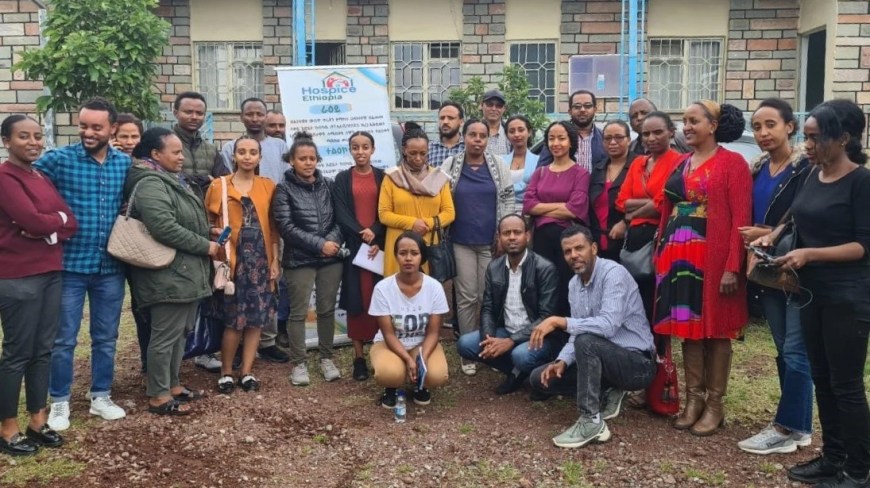
The Addis Ababa Health Bureau have recently organised and funded palliative care training for 120 of their staff: doctors, nurses and pharmacists, with a vision to establish the provision of palliative care at health centres in the capital. The training is being provided by Ephrem Abathun from Hospice Ethiopia, Dr Henok, Dr Habtamu and one of their own staff who received training last year from Hospice Ethiopia. It is both exciting and challenging for Hospice Ethiopia to receive increasing numbers of requests from different health organisations for palliative care training. Health care professionals are increasingly realising how their patients will benefit from this type of care and we look forward to more people receiving focused symptom management in their terminal illnesses. 

Training at Dessie:
Hospice Ethiopia UK has recently helped to fund training in a new oncology department at the hospital in Dessie, in north-central Ethiopia, which ran from 17th-21st July. Overall £6000 was donated – £500 from the Paradigm Norton Trust, £500 from Aylsham Rotary, and £5,000 from the Forrester Family trust. Dr Haimanot, Executive Director of Dessie Hospital, expressed her thanks for the training that will enable her staff to improve care for their patients. A total of 29 members of staff, including doctors, nurses, and hospital management, received the training. There will be follow-up and mentoring from the Hospice Ethiopia staff.

Meeting with the Ethiopian Minister for Health

The team at Hospice Ethiopia in Addis Ababa had a very productive meeting with the Ethiopian Minister for Health, Her Excellency Dr Lia Tadesse, along with other representatives from the Ministry of Health (MOH) and staff from Hospice Africa Uganda. Palliative care and opioid use for pain relief were discussed, and representatives from the Ministry of Health committed to support the re-initiation of local Morphine production. This is a crucial step as Morphine is a very effective pain-relieving drug in palliative patients and is currently unavailable in Ethiopia. The palliative care representatives at the MOH will be working with the technical advisory team, the pharmacy department at Addis Ababa University, and other pharmaceuticals in the country to assess the resource requirements and mobilization for the local production of morphine.

Successful talk by Lord Dannatt

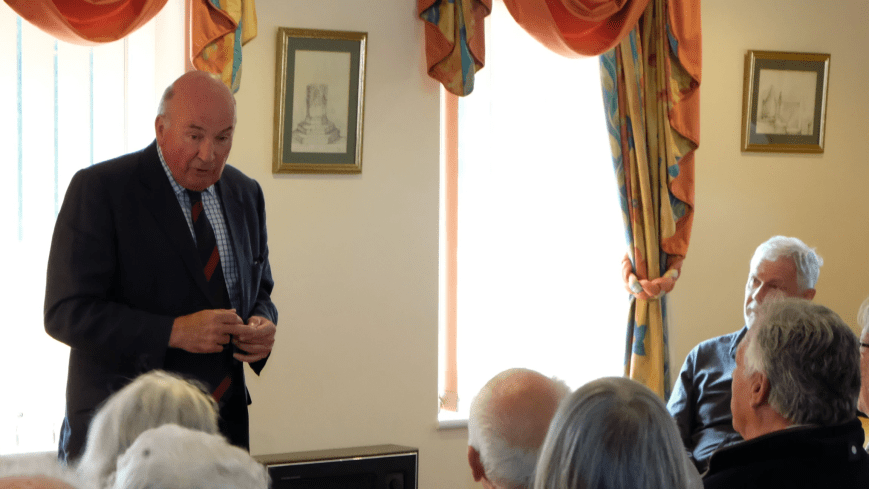
Huge thanks to everyone who came to hear Lord Dannatt’s talk in June (see above photo). His talk was fascinating from responding to questions about 19th century warfare right up to analysis of the conflict in Ukraine. His insights into Putin’s Special Military Exercise were particularly thought provoking. With a packed audience an amazing £1083 was raised to support the work of Hospice Ethiopia.

Patient Story: Omari

Omari is a 40 year old male with HIV and diabetes. He was diagnosed with an abdominal tumour 10 years ago and underwent surgery. After the surgery he became partially paralysed; the exact cause of this is unknown but may be due to spinal cord compression from spinal metastases (secondary cancer). The Hospice Ethiopia team became involved in his care a year ago to control his pain and help him with his psychosocial issues. A few months ago he had a fall and since that time he has been unable to walk and so is bedbound and incontinent. He complained of pain in his legs and was prescribed a number of medications to try to control the pain; although none have been very effective.

Omari is now unable to straighten his legs and finds moving his legs exacerbates the pain; in addition he has suffered from bedsores for several months. Recently he has developed 2 new sores on his lower back which were caused by a hot water bottle as he has numbness in that area so did not realise how hot the bottle was.

He lives in a small Kebele house (social housing) with his wife and their 2 children, aged 3 and 7. His family have employed a maid to care for him. He has a strong Christian Orthodox faith and as he can no longer get to church the priest visits him at home and prays with him.

Plan: He agreed to restart tramadol for the pain in his legs. Nurse Filagot will provide a sheath (donated by Hospice Ethiopia UK) to ease the problem of incontinence. The family are currently buying pads which are expensive ETB 2,000 (£33 approximately) per pack of 24. The nurses from Hospice Ethiopia will continue to visit him regularly. Filagot had a good rapport with Yonas, listening to him attentively and quietly talking with him.

Maintaining relationships with long term supporters

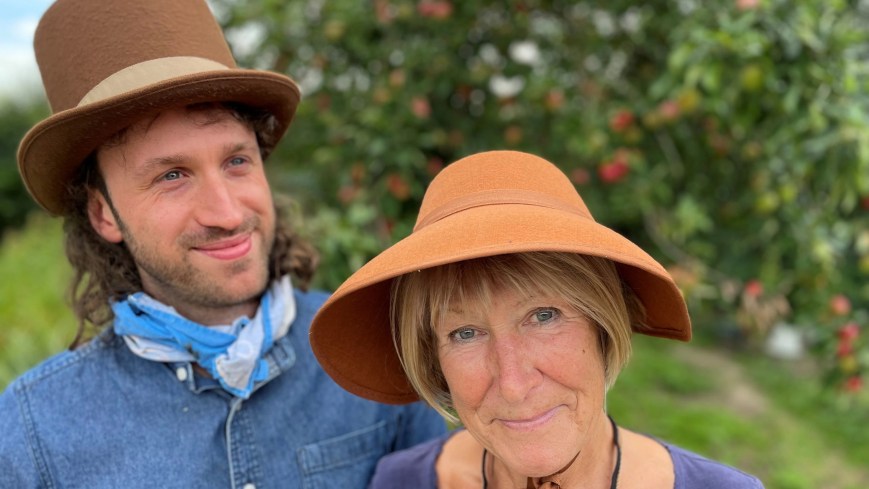
Sue and Jamie have recently been meeting in the UK with some interesting contacts.
First, Dr Nuhamin Tekle, who has worked closely with Hospice Ethiopia in Addis Ababa, has been back in London continuing her studies at King’s College. This is for her doctorate researching different models for providing community palliative care in resource-poor settings. Sue and Jamie enjoyed a delicious meal with her at the Beza Restaurant in London.
Second, Sue and Jamie were delighted to host Dr Marc Clark, a Canadian palliative care doctor visiting the UK. Marc has close links with the Ayder Hospital in Mekelle in Tigray, Northern Ethiopia where there is an enthusiastic team of health care professionals wanting to develop palliative care services. This was a great opportunity to discuss how collaborative work will help improve access to palliative care across Ethiopia and show Marc some of sunny Norfolk and enjoy a game of croquet!

Ayana’s Story

Ayana (not her real name) is a 38 year old Christian Orthodox woman, who was diagnosed with HIV 9 years ago. She has been prescribed Highly Active Antiretroviral Therapy (HAART) for her HIV disease which she gets free from the local health centre. Three years ago she was diagnosed with vulval cancer and subsequently received 11 cycles of chemotherapy (after having first tried Holy water). She is now waiting for radiotherapy to control her pain, vulval swelling, bleeding and discharge. She is unable to sit comfortably despite taking tramadol 50mg twice daily for pain. Nurse Filagot talked with her about increasing the tramadol but as the ceiling dose is 50mg 4 times daily (QDS) Nurse Filagot was worried about what she will be able to prescribe when the pain gets worse (as oral Morphine is unavailable). Ayana also complained of neuropathic pain down her right leg, so Filagot decided to arrange for amitriptyline 12.5mg at night to be prescribed. Amitriptyline will hopefully help with her sleep too.

Ayana’s mobility is much reduced due to the vulval swelling and pain rendering her housebound and dependent on her family. In addition, she has a poor appetite and local skin irritation when passing urine. She lives with her parents and does not have any children. She receives food support from Hospice Ethiopia as she had stopped working as a cleaner due to the progression of the disease.

Successful event at Stody Lodge, Norfolk

We were delighted to be invited by Kate MacNicol to provide the teas at their Open Garden at the end of May. Alongside 200 varieties of rhododendrons and azaleas, this open garden in North Norfolk also has some wonderful magnolias, camellias, expansive lawns, woodland walkways and vast carpets of spring bulbs. Its 4-acre Azalea Water Gardens holds 2,000 Azalea mollis plants which is believed to be the largest single planting in the UK. 

We are extremely grateful to all of the many volunteers who helped with baking cakes, serving teas, setting up, clearing up, parking and more. Thanks also to the Blakemore foundation who donated some cakes.

We were extremely lucky with the weather, the sun shone down and it was a glorious spring afternoon. Overall we made a fantastic £684 for Hospice Ethiopia!

British doctor volunteering at Hospice Ethiopia

A British doctor, Fredrika Collins, is currently living in Ethiopia and volunteering at the Hospice in her free time. She’s written an article for us about her time there:

I am Fredrika, a doctor from the UK, working in Addis Ababa, Ethiopia, hoping to specialise in Palliative Care.

I have been living in Addis Ababa for 7 months. I arrived just before the Meskel celebration in September 2022, an important date in the Christian Orthodox calendar which commemorates the finding of the True Cross. This impressive spectacle sees thousands of worshippers congregate in Meskel Square, Addis Ababa’s main square, dressed in traditional white robes and holding lit candles, as they sing together in front of a gigantic bonfire. It was an early introduction into Ethiopian culture, where the main religion is Orthodox Christianity. Tradition and faith run strongly through communities.

I’m working as an internist at a busy international hospital among a majority Ethiopian team. I have found the work challenging but incredibly stimulating. During my days off I’ve had the great privilege of volunteering with Hospice Ethiopia, where the vast inequality between their patients and those at the private hospital where I work has become apparent.

During my time with Hospice Ethiopia I have joined Nurse Filagot on several of her home visits and I have been blown away by her skill, dedication and compassion. The main issues I saw confronting patients were poverty, social isolation and uncontrolled pain, the latter largely arising from a chronic shortage of oral morphine in Ethiopia. Unwell patients who can no longer work often can’t afford basic necessities, let alone hospital care or expensive medical supplies such as stoma bags. Sometimes they become cut off from their community or family which is particularly sad to see.

It has been inspiring to watch Nurse Filagot navigate these many problems with only limited resources. Depending on the patients’ needs she provided medicines, economic or food support packages, referrals to health facilities and always a listening ear. She often acted as an intermediary between the patient and their family to help resolve conflict or misunderstanding.

Patients who are socially isolated and able to travel to the main Hospice Ethiopia site have the opportunity to join the weekly day centre, where they can enjoy coffee, lunch, music, talking and of course – never an opportunity to be missed – traditional Ethiopian dancing, known as eskista. Joining this session, led by Wengi, the brilliant project director, was extremely heart warming and I could see how happy and animated the group became.

Last month I also had the chance to travel to Kampala, Uganda, to visit the main Hospice Africa site and meet the legendary Dr Anne Merriman. An article about the team’s work recently appeared here in The Guardian. I toured their morphine production unit, a series of stainless steel containers in a small room that supplies all of Uganda’s oral morphine. Before this production unit came into action, Uganda’s population faced the same restricted supply of oral morphine as Ethiopia does today. The hope is that a similar system can be set up in Addis Ababa, which would be truly transformational for the many terminally ill patients living in extreme uncontrolled pain throughout Ethiopia.

I am grateful to Hospice Ethiopia for welcoming me into their team and look forward to the next year working with them.

Notice of Annual Meeting March 2023

Hospice Ethiopia UK’s AGM will take place on

Tuesday 28th March 2023 at 18.30 (BST) via Zoom

All supporters welcome.

Do join us via the Zoom link below to hear what we’ve been doing over the last year. It will include a short video from Ephrem, the Director of Hospice Ethiopia, describing how our money is put to good use caring for the dying in Ethiopia. He will be joining our meeting to answer your questions too. To read the Annual Report for 2022 please click here. Last year’s AGM minutes, this year’s agenda, and the financial statement can be viewed here. All welcome!

Join Zoom Meeting

https://us02web.zoom.us/j/83454537974?pwd=VDNhcHY1Wjd0QnhwWm5FVHBDTHRpQT09

Meeting ID: 834 5453 7974

Passcode: 349320