A day in the life of Ephrem Abathun

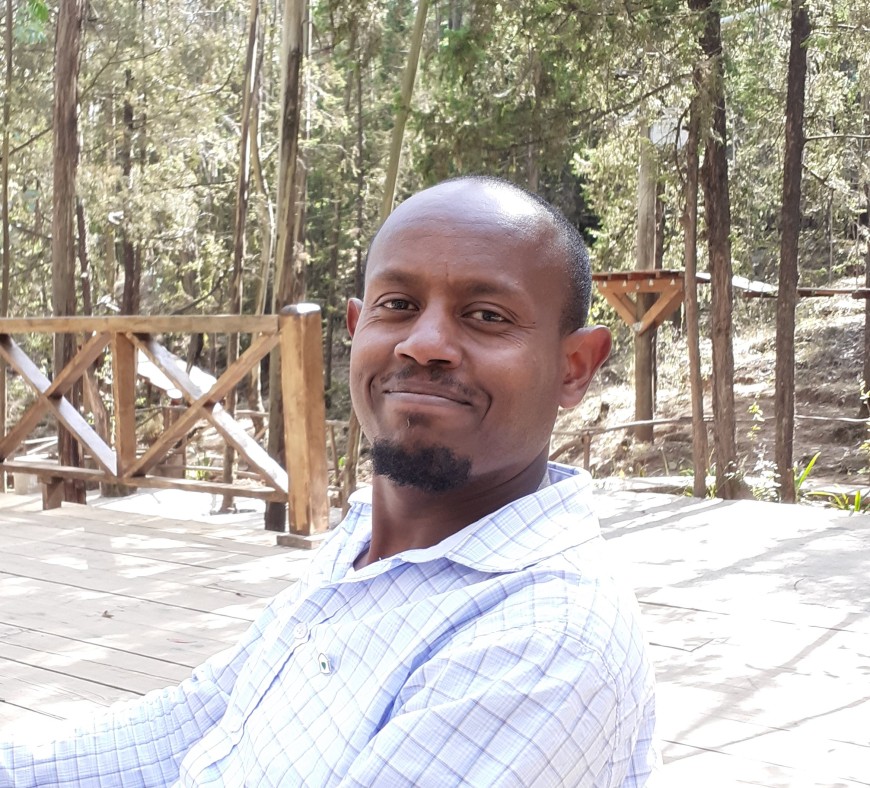
When the trustees visited Hospice Ethiopia last month, we took the opportunity to ask Hospice Ethiopia’s Director, Ephrem Abathun what a typical working day looked like for him. We thought you might be interested to hear what he said.

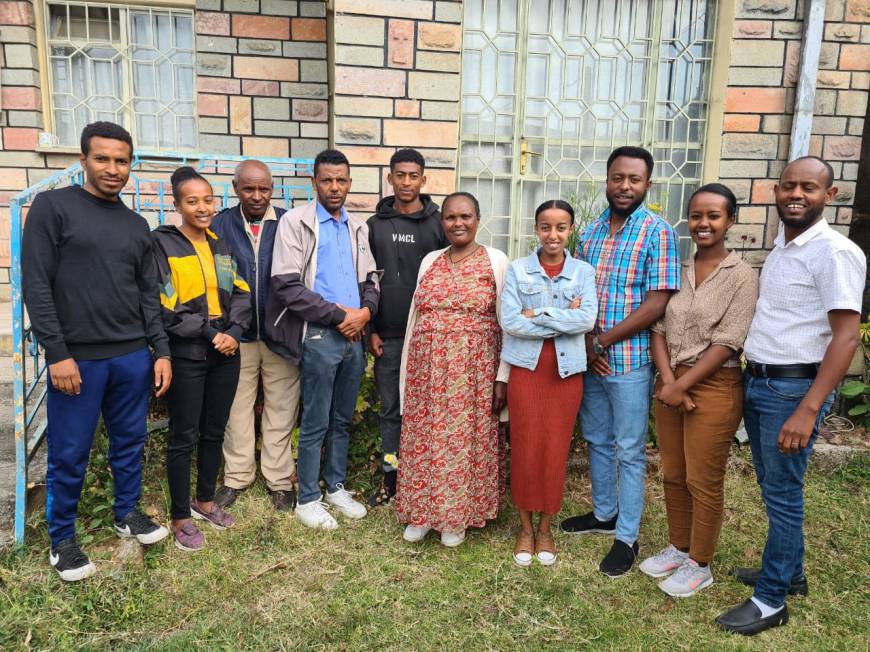
His day usually starts about 6am but may be earlier if he has international guests visiting. He aims to leave home around 6.30am after eating some kinche (cracked wheat) or eggs with bread and has an hour’s drive (25km) to the HE premises. Ethiopian coffee (and occasionally tea) is drunk with breakfast, in the morning, after lunch and mid-afternoon. Gullilat Korbu (Finance Officer), Wengi Yared  (Programme Manager), and the nurses arrive shortly after him, between 7.30-8am.

Ephrem’s working day begins with reviewing operational activities so that he knows what he has to prioritise and on certain days of the week there are regular weekly meetings for example on Monday mornings he has meetings with the staff and the management team (Wengi Yared and  Gullilat Korbu). Lunch is around midday and is always a working lunch. He either brings lunch from home – “spaghetti pasta” or he meets international guests for a working lunch. On Monday afternoons he holds a clinical meeting with the nurses when difficult and distressing cases are discussed. He tries hard to make sure this meeting is not cancelled as it is a good opportunity to share his experience and build good working relationships with his clinical staff.

There a number of things that have to be fitted in around meetings and appointments for example, working on project applications with Wengi, speaking to local partners on the phone for example the Addis Adaba Health Bureau, attending face to face and virtual meetings with donors and partners, and writing reports.

During the last 2 years he has rarely had time to visit patients himself who are registered on the Home Based Care programme but now that doctorate is finished he hopes to have more time to support the nurses carrying out these visits. Certainly Hospice Ethiopia’s patients benefit hugely from his wealth of experience.

Ephrem usually leaves the office around 6-7pm and then has an hour’s drive home, receiving phone calls from staff, partners and others on his way. He tries to eat supper with his wife and 2 girls (aged 9 and 12) when he arrives home, which might be pasta, injera, barley bread and vegetables. Meat (beef) is eaten once or twice a week. (Beef is the cheapest meat in Ethiopia and is cheaper than goat, chicken, lamb and is produced across Ethiopia.) Once his daughters are in bed there is often more work to catch up with.

Ephrem works 5 days a week in theory but at weekends he works at least a further ½ day’s work. He tries hard not to work at all on Sundays so that he can spend time with his family.

This typical day looks pretty straight forward but from our experience working in Ethiopia is challenging. Long traffic jams, intermittent internet, massive paperwork demands by regulatory authorities, lack of internet banking and certainly no internet shopping all demand the patience of a saint. Fortunately Hospice Ethiopia’s Executive Director is one of these!

Patient Story: Abigia

Abigia, a female aged 29, was diagnosed with rectal cancer 2 years ago when she was referred to the Black Lion Hospital (BLH) with abdominal pain and a bloody perineal discharge.

She was treated with surgery (a colostomy was formed after attempted tumour resection failed) followed by radiotherapy and 6 cycles of chemotherapy. When treatments proved unsuccessful for her cancer which had spread from the primary site, she was referred to Hospice Ethiopia for palliative care.

Her social history is tragic and her physical problems are complex. She is of protestant faith and was previously living with a Muslim husband and a son, aged 12. However, her husband left her without support and moved, with her son, to Harar (a city in eastern Ethiopia). Her parents live in Addis Ababa but there is no contact with them (they do not answer her telephone calls), likewise, her 12-year-old son has declined visiting her.

She has no neighbours to care for her and is too weak to cook for herself, so she is emaciated and weak, and confined to her bed in her single room (approximately 3m X 4m) house. She is under threat of eviction as she is destitute and her landlord is fearful of her dying in his property.

Until the visit, she had reduced her food intake as she had no stoma appliances and thus hoped to minimise her bowel actions via the colostomy. She had significant local pelvic pain and an open perineal wound with odorous discharge. She was taking tramadol 100mg twice daily and amitriptyline 12.5mg at night for the pain but these gave little respite. The BLH had prescribed injectable morphine 5mg which should be administered 4 hourly to work effectively. However, an injection required a visit to the health centre (volunteer drivers had taken her 600m to the health centre on an ad hoc basis) so injections were infrequent but had helped the pain for a few hours.

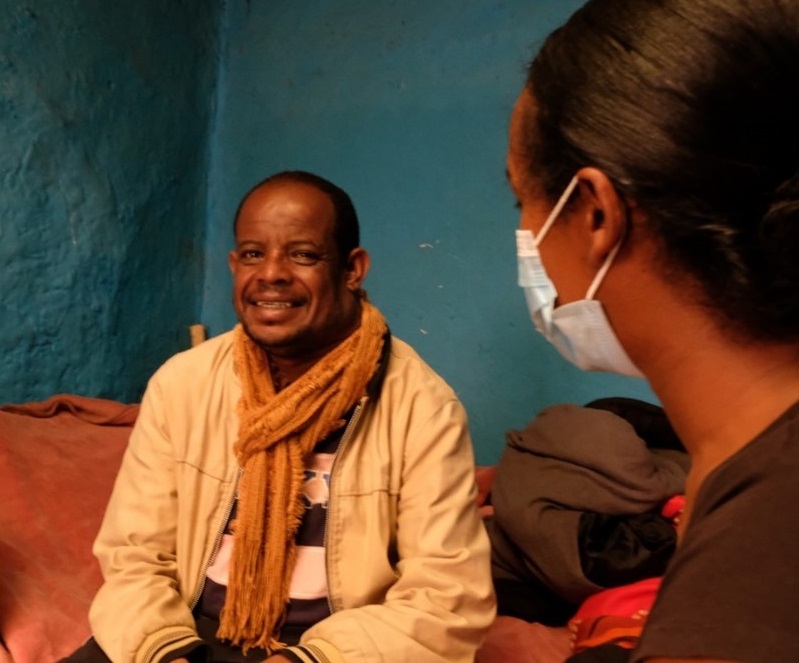
The care plan from Hospice Ethiopia’s nurses included ongoing financial support from the Tewolde Medhane fund, provision of medicines and stoma bags, counselling from nurse Kalkidan (who also donated her lunch) and a follow up visit later in the week. She declined being photographed and not surprisingly was tearful during the visit.

The Big Give Christmas Challenge 2023 – target reached!

We are so grateful to all who donated during the ‘Big Give Christmas Challenge 2023’. We asked you to help us reach our biggest target ever – with 41 donations, £5,880 was given which means with our matching pot and Gift Aid an amazing £13,492 has been raised. Giving a 30% pay rise to the staff of Hospice Ethiopia will make a substantial difference for them. They are highly trained in providing excellent palliative care in a challenging setting and need to be rewarded for this. Hospice Ethiopia cannot afford to lose such staff and this will enable them to provide a living wage for their skilled workforce.

“I am very pleased for the salary increase. It is really helpful for my financial hardship and motivates me to work harder. I am grateful for the leaders behind this good intention”. Gullilat, Hospice Ethiopia Finance Officer.

The Big Give 2023 ends soon!

We are really delighted with the response so far to our Big Give project 2023 – the donation window is ending soon at midday on Tuesday 5th December. If you haven’t had a chance to donate yet, don’t worry – there are still match funds available so every pound you donate will mean £2 for Hospice Ethiopia. We have raised a fantastic £7,710 so far; please help us reach our target of £11,760 to enable the hard-working staff in Ethiopia to get a pay rise.

Please visit the Big Give website here to donate.

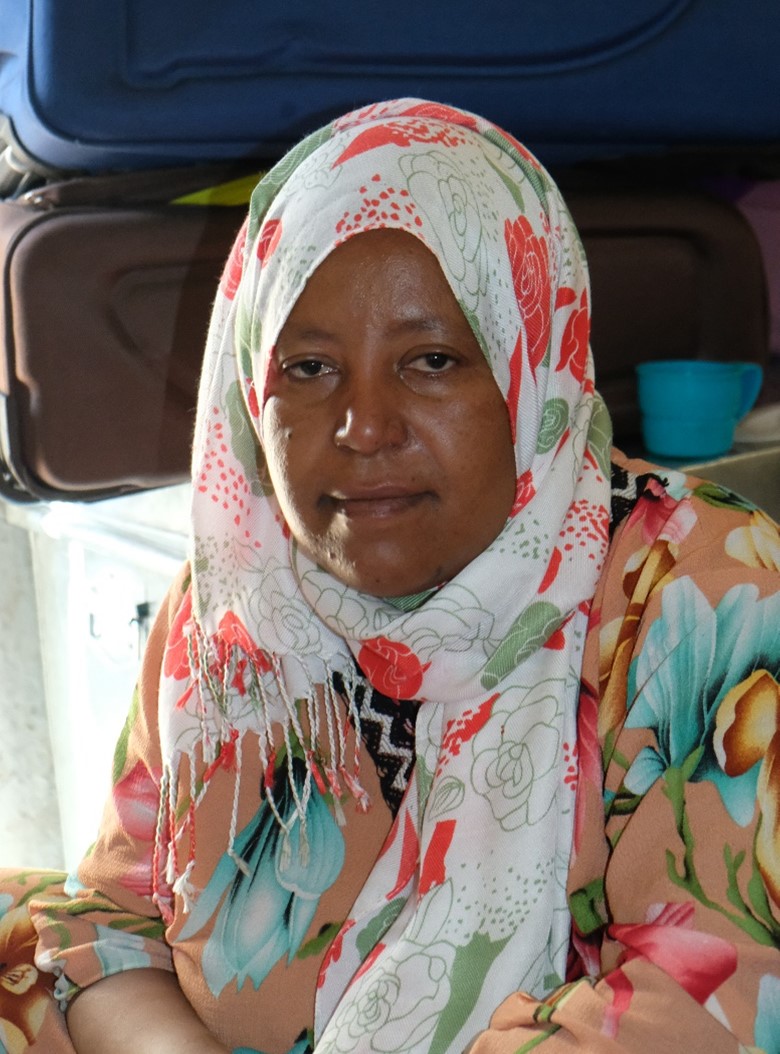
Your donation will enable people like Mariam (not her real name; see photo) to have ongoing visits from Hospice Ethiopia’s nurses to help her cope with her depression and anxiety. She is aged 35 and was diagnosed with bowel cancer in the United Arab Emirates (UAE) where she was a migrant worker. She paid for surgery to remove the cancer and a colostomy was formed. The UAE government does not provide free health care to migrant workers so she returned to Addis Ababa and has had 10 cycles of chemotherapy at the Tikur Anbessa hospital. Mariam had to buy these drugs from the hospital pharmacy and if they were out of stock she had to go outside the hospital to a pharmacy to try and buy the necessary drugs.

The chemotherapy has caused ongoing diarrhoea which has been extremely problematic to manage especially when she did not have any stoma bags. Fortunately, a new supply of stoma bags was brought to Hospice Ethiopia by the HEUK trustees.

Mariam is effectively destitute and therefore lives with her mother (who also has terminal cancer) in a one-room house along with her infant niece. She is unable to work due to her illness and relies on a monthly grant from the HE Tewolde Medhane Fund (formerly the Comfort Fund) to buy food, medicines and other essential items.

The Big Give 2023

Dear Supporter,

Many of you have generously made donations in the past that have helped provide care for patients at Hospice Ethiopia. We’re very excited to let you know that Hospice Ethiopia UK has been selected again this year to participate in The Big Give Christmas Challenge 2023, the UK’s largest matched funding campaign.

We will be raising money specifically to enable Hospice Ethiopia’s programme staff to receive a pay rise. For many reasons including the recent civil war, inflation in Ethiopia is approximately 30% resulting in a huge increase in running costs. Hospice Ethiopia has worked hard to support and train a highly skilled workforce. In order to continue to attract and retain staff they need to pay their programme staff a wage that keeps pace with inflation.

One donation, twice the impact.

Donations to this project will be matched for 7 days, from 12pm on Tuesday 28th November 2023. So, every pound you give during that period means two pounds for Hospice Ethiopia.

What do I need to do?

● Add a calendar reminder to your diary for 12 noon on Tuesday 28th November to 12 noon on Tuesday 5th December 2023

● Make your donation via http://www.thebiggive.org.uk – click on the Christmas Challenge and search for Hospice Ethiopia UK

● Alternatively, go directly to the donation page here

Please note the donate button will only appear on the campaign page when the Christmas Challenge launches at 12pm on 28th November.

If you have any questions, don’t hesitate to get in touch with us at info@hospiceethiopia.org.uk

Many thanks in advance for your support,

The Trustees of Hospice Ethiopia UK