
Please see the full report for Jamie Mumford, Kit Forrester, and Ellie Dharamraj’s visit to Ethiopia in October here.
September fundraising successes
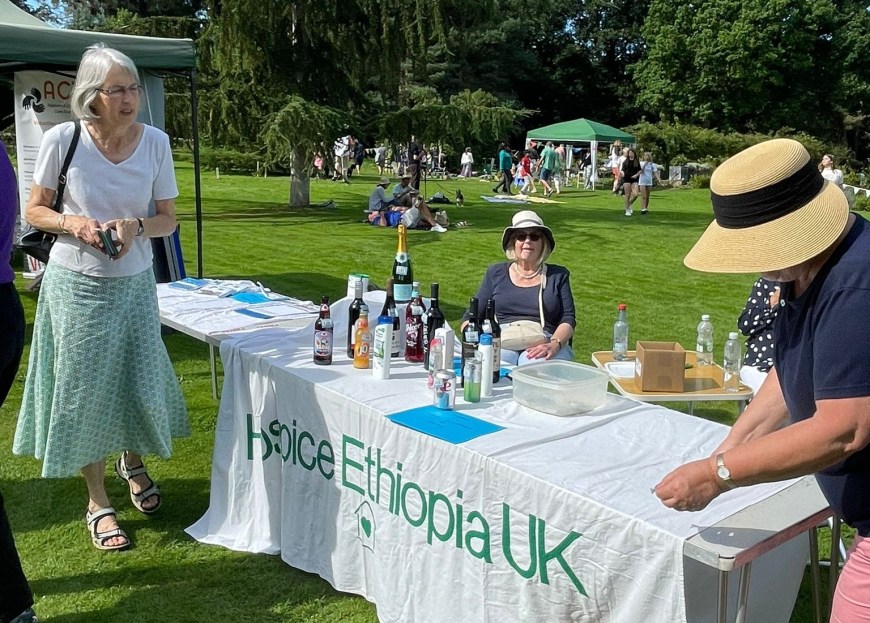
Hospice Ethiopia UK has been involved in a number of fund-raising events this month and an amazing £1,200 including £431 at the Mannington Hall Charity Day (see photo) has been raised to support the work of Hospice Ethiopia. Very many thanks to all our volunteers and supporters. We couldn’t do this without your help!
Staff news from Ethiopia
We are delighted that Ephrem, Director of Hospice Ethiopia has been awarded his doctorate from the University of South Africa. He is the FIRST Ethiopian to have been awarded a doctorate in palliative care in the country. He studied ‘breaking bad news’ and identified the preferences of patients and individuals in how they would like to be informed of their condition when diagnosed with a life-threatening illness. He went on to develop a culturally sensitive guideline for breaking bad news in the palliative care setting in Ethiopia.
He commented “This represents a life time achievement through contributing to palliative care services in Ethiopia. The results will significantly contribute to Ethiopian patient care and treatment practice and decisions when life-threatening illness is diagnosed. Hopefully the results will be adapted for use in other African palliative care settings.”
Dr Barbro Norrstrom (a Swedish oncologist and palliative care specialist) summed up Ephrem’s achievement by saying “I’m so incredibly impressed by Ephrem, his great capacity, dedication, compassion for palliative care and the implications for all Ethiopians in need of palliative care, be it cancer be it other severe end of life illnesses, as well as the overall activities to get palliative care on the agenda, governmental, educational from top to bottom.”
Well done Ephrem!
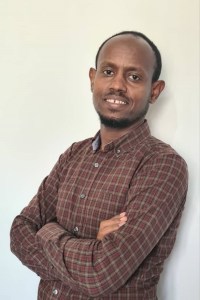
In addition we wish to welcome Nurse Abenezer Tilahun, who has recently started work at Hospice Ethiopia. He was born in Addis Adaba and gained his Batchelors degree in Nursing at Debre Birhan University in 2017, followed by his Masters degree in Public Health at Yanet Health College in 2022. He has over 5 years clinical experience during which time he worked at the Armed Force Comprehensive and Specialised Hospital, the largest military hospital in Ethiopia. His induction at Hospice Ethiopia has been organised by Ephrem and he is currently working alongside Sr Filagot and Sr Kalkidan. He says “I am glad to be part of Hospice Ethiopia and the mission it stands for”.

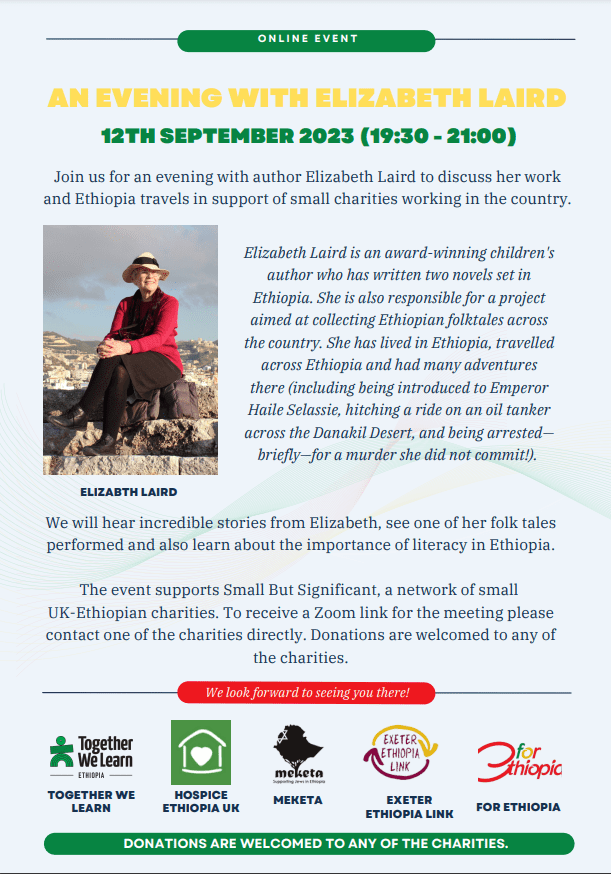
An Evening with Elizabeth Laird
Tickets now available! Jane Austen event, Barningham Hall
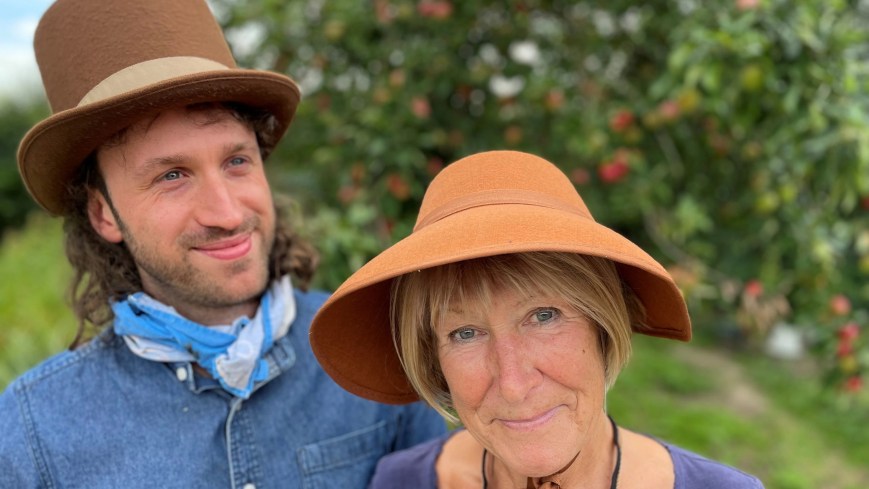
Tickets are now available for our next fundraiser on Sunday 24th September 3pm at the fantastic venue of Barningham Hall (see above photo). There will be dramatised readings from Jane Austen’s Emma alongside period music from the brilliant Emma Nuule, sumptuous cream teas and a themed raffle. Tickets are £17.50 from the Mumfords 01263 768699 or email info@hospiceethiopia.org.uk. Please bring cash for the raffle.
August news from Ethiopia
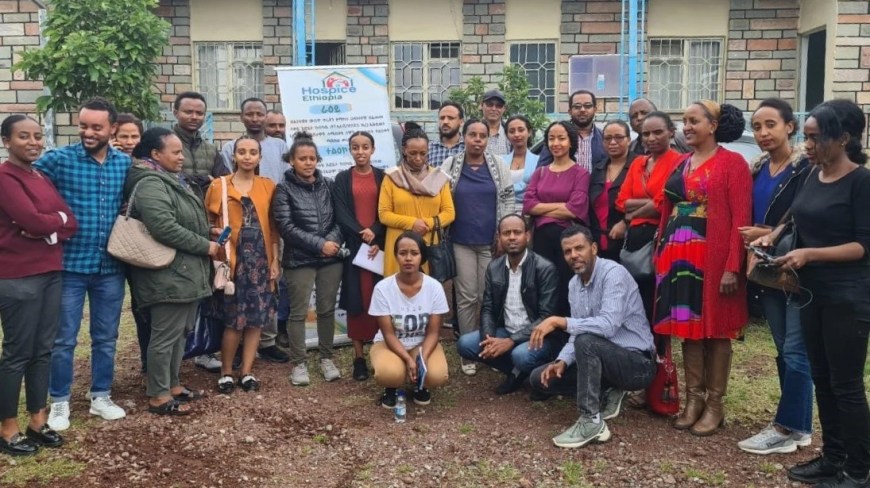
Hospice Ethiopia were honoured to have hosted an ‘Experience Sharing Meeting’ for Addis Ababa Health Bureau. A dynamic team of 20 healthcare professionals representing different sub-cities attended the meeting. Ephrem provided an overview of Hospice Ethiopia, shedding light on their main programs and the services they offer. The palliative care nurses, Kalkidan and Filagot, then shared their invaluable experiences regarding service provision, the care model, and also the challenges they face in their work.
The Q&A session was lively, where different ideas were raised, fruitful discussions occurred, and experiences were shared.

Haiminot’s story
Haiminot is a 36 year old lady with HIV diagnosed 15 years ago, and cervical cancer diagnosed 8 months ago at the Tikur Anbessa Hospital. She has been on the waiting list for radiotherapy since diagnosis, but has not had any cancer treatment to date. A single parent, her 15 year old son is in the care of her sister, who is also of very limited financial means. Her son visits about once a month. She is renting a single room (about 3m X 3m) for ETB 1,800 per month (about £28). Apart from the monthly grant from Hospice Ethiopia of ETB 1,000 she appears to have no other source of income. She had previously spent 2 months living in a church near Dessie (400 km north of Addis Ababa) hoping for a cure as someone had told her the Holy water there was good for cancer sufferers. She was referred to Hospice Ethiopia by the Tikur Anbessa Hospital.
The Hospice Ethiopia team had previously successfully treated her odorous vaginal discharge with metronidazole douches, along with tramadol for pain and bisacodyl for constipation. However, she then stopped taking all her medicines apart from her antiretroviral medication, believing that her religious faith would bring about a cure; her odorous vaginal discharge then recurred. She is now house bound with very limited mobility as she likely has nerve damage affecting her leg muscles, probably caused by the tumour. Other medical problems include anaemia for which she had previously been prescribed an iron supplement syrup which she had stopped taking and she had declined a blood transfusion on religious grounds.
Nurse Filigot spent much time listening to this lady exploring her health beliefs and emotions. She looked low in mood. Filigot negotiated for her to resume the vaginal douching with metronidazole for the odorous discharge but otherwise she continued to decline further treatment aside from her antiretrovirals. She remains on the Tewolde Medhane fund (monthly grant). She will be reviewed in a month unless she returns to the church at Dessie, and has Filagot’s phone number should she need to be seen sooner.
Hospice Ethiopia in the media!
We’re very excited to see the publication of an article written by one of our contacts in Ethiopia, Fred Harter, which describes the current state of palliative care in the country and the critical work carried out by Hospice Ethiopia. Please read the full article here. Following this Ephrem, the director of Hospice Ethiopia in Addis Ababa was interviewed by the BBC in August, for their Newsday radio program.
July fundraising
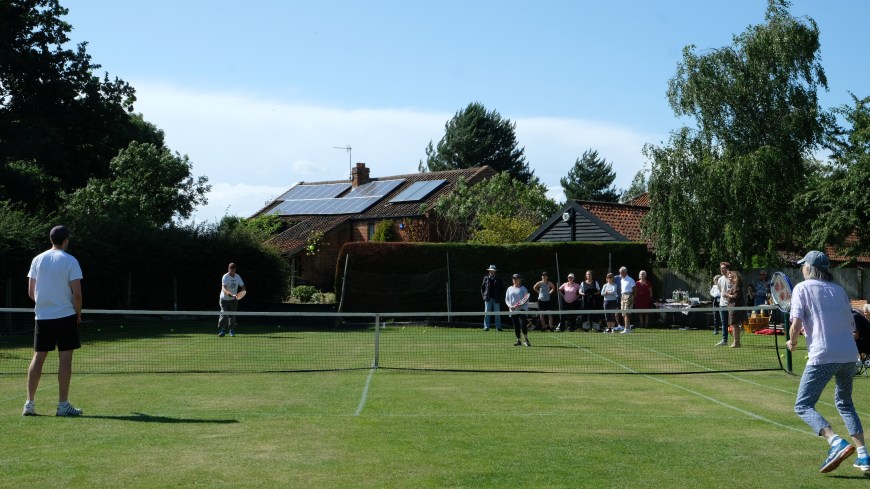
Thank you to everyone who has volunteered and supported our recent fundraising events which have raised a total of £782.50. These included a Tombola at Aldborough Fayre (£227.50), the Morgan’s tennis party (£305) (see photo), and a presentation to Reepham Rotary club (£250). This brings the total raised through events this year to a fantastic £6250 – thank you so much to all of our volunteers and supporters for raising these funds to support the vital work of Hospice Ethiopia.
July news from Ethiopia
Report from Wengi Yared, Project Co-ordinator, Hospice Ethiopia:
“I am thrilled to have successfully completed the Young African Leaders Initiative Regional Leadership Center East Africa (YALIRLCEA) Residential Programme. It was a privilege to have joined the very competitive programme as one of 3 Ethiopians in Cohort49. It has been an incredible journey, filled with transformative experiences and invaluable learning opportunities. Throughout the four-week programme, I had the privilege of engaging in experiential learning which equipped me with the necessary tools and knowledge to drive meaningful impact. Collaborating with a diverse group of talented peers further enriched experience. I look forward to applying my skills and knowledge gained during my training to drive positive change in my community and beyond.”
Links with the Pink House:
Sue and Jamie were invited to visit The Pink House in Addis Ababa during their visit to Ethiopia last February. It was set up 5 years ago as a non-governmental organisation (NGO) which provides accommodation for female patients coming to the capital for oncological treatment (mostly breast cancer and cervical cancer) who would otherwise have nowhere to stay. The patients often have advanced disease and experience highly unpleasant symptoms. We were delighted to hear that a Memorandum of Understanding has now been established between the Pink House and Hospice Ethiopia agreeing that Hospice Ethiopia will hold a weekly clinic at the Pink House to enable their patients to receive specialist symptom management.
Training for nurses working for the Addis Adaba Health Bureau:
The Addis Ababa Health Bureau have recently organised and funded palliative care training for 120 of their staff: doctors, nurses and pharmacists, with a vision to establish the provision of palliative care at health centres in the capital. The training is being provided by Ephrem Abathun from Hospice Ethiopia, Dr Henok, Dr Habtamu and one of their own staff who received training last year from Hospice Ethiopia. It is both exciting and challenging for Hospice Ethiopia to receive increasing numbers of requests from different health organisations for palliative care training. Health care professionals are increasingly realising how their patients will benefit from this type of care and we look forward to more people receiving focused symptom management in their terminal illnesses.
Training at Dessie:
Hospice Ethiopia UK has recently helped to fund training in a new oncology department at the hospital in Dessie, in north-central Ethiopia, which ran from 17th-21st July. Overall £6000 was donated – £500 from the Paradigm Norton Trust, £500 from Aylsham Rotary, and £5,000 from the Forrester Family trust. Dr Haimanot, Executive Director of Dessie Hospital, expressed her thanks for the training that will enable her staff to improve care for their patients. A total of 29 members of staff, including doctors, nurses, and hospital management, received the training. There will be follow-up and mentoring from the Hospice Ethiopia staff.
 Hospice Ethiopia UK