Patient story: Kia

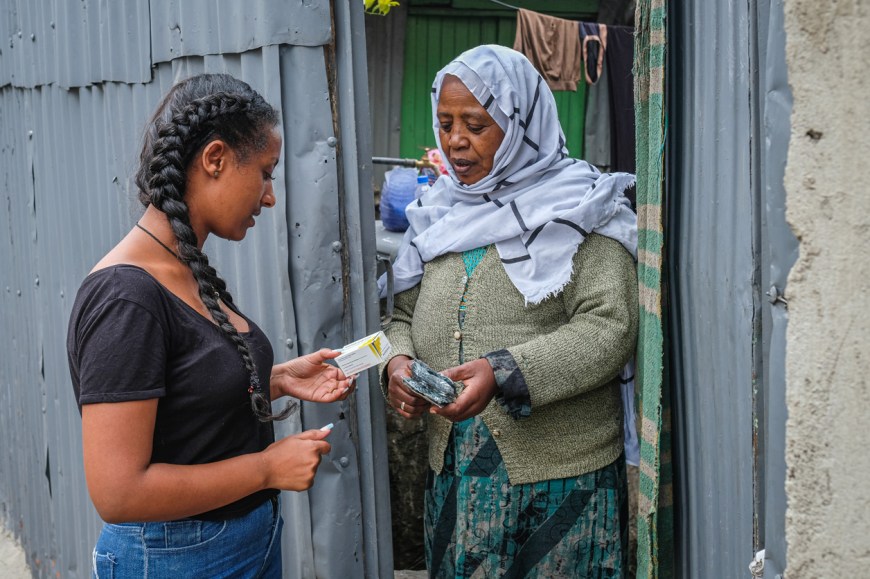
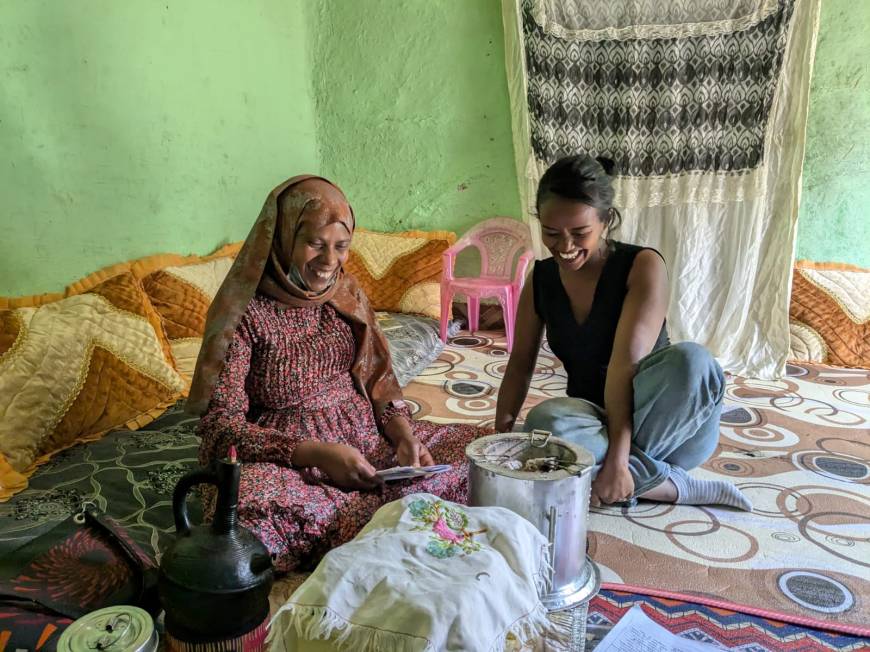
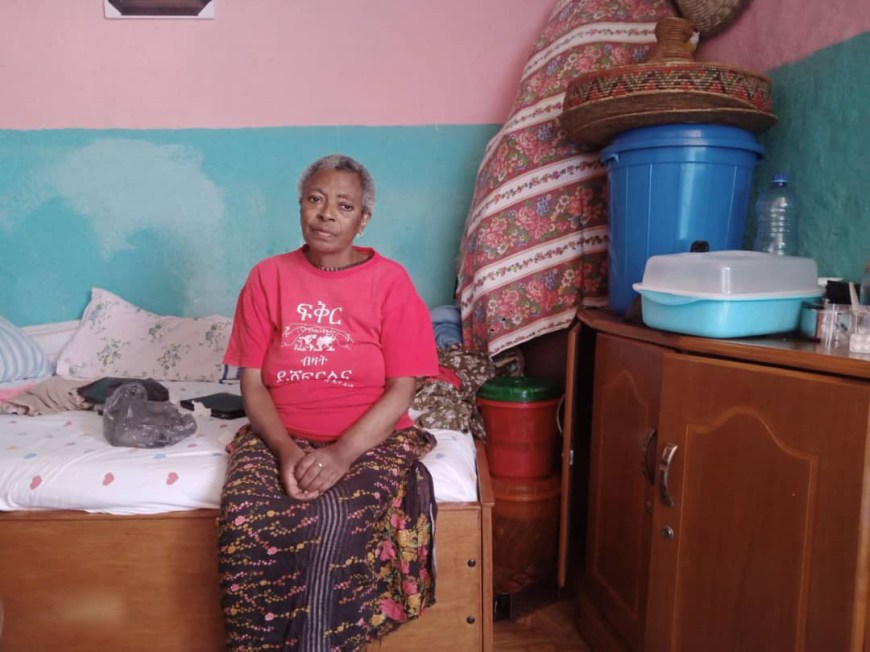
Jamie and Sue visited Kia during their recent trip to Addis Adaba. She is a 35 year old female patient with breast cancer. She follows the Muslim faith from which she derives great spiritual support.

She received her diagnosis 4 years ago and following a biopsy she underwent a left mastectomy at the Tikur Anbessa Specialized Hospital (TASH), and subsequently received 8 cycles of chemotherapy. In June 2024 she developed vaginal bleeding and underwent further surgery for ovarian cancer, along with an endometrial polyp. The ovarian cancer is a probable secondary cancer to the original breast cancer. She has been advised that further chemotherapy will not be beneficial.

She lives with her husband and 3 children aged 9, 8, and 5 in a single room house. Her husband sells fruit and vegetables from a small road-side stall. Her 8 year old daughter has severe life-long disabilities. She is unable to walk, talk, or feed herself so needs round the clock care but does go to a local school for special needs during weekdays. Kia receives a monthly grant from the Tewolde Medhane fund and intermittent food support from Hospice Ethiopia.

She has been prescribed anastrozole (hormone treatment) for her breast cancer, which is giving her menopausal type symptoms. She takes ibuprofen as required for back pain and also Sildenafil for Reynaud disease-type symptoms of her fingers. This medication is usually prescribed for male impotence and we shared some giggles as we suggested keeping it away from her husband!

Despite the very difficult health, family, and financial situation, Kia was cheerful and at peace with herself. She commented she would not be able to cope without the support from the team from Hospice Ethiopia.

Patient Story: Genet

When we visited Ethiopia in February 2024 we met Genet, a 57 year old spinster. She is a Protestant Christian and has an adopted daughter who had recently been married.  Genet lives alone in a rented single room house. Before becoming ill, she had worked in a school, but was now unable to work and had no income, so receives a monthly grant from the Tewolde Medhane Fund (previously known as the Comfort Fund). She learned about Hospice Ethiopia from a friend so she referred herself to Hospice Ethiopia. Prior to this she had received 7 doses of chemotherapy at the Black Lion Hospital for her incurable colon cancer that had spread to multiple sites in her liver. The chemotherapy had made no impact on her disease and she had not been offered any other anti-cancer treatment such as radiotherapy.

Genet had been prescribed tramadol for her pain by the hospital for a neuropathic (nerve) type pain. When she was first assessed by Nurse Kalkidan, her physical problems were abdominal pain, fatigue, reduced appetite, constipation and intermittent vomiting. She had been prescribed a steroid medication for the vomiting by the hospital. During our visit Nurse Kalkidan adjusted her pain killing medication adding in metoclopramide and omeprazole for the nausea along with gabapentin (300mg daily) for the pain and bisacodyl to prevent constipation.

She is being supported spiritually by her religion and church connections. She was counselled by Nurse Kalkidan and encouraged to remain as active as possible (she goes to church and is able to walk around). We explained the difficulties of treating fatigue and advised eating whatever she fancied whenever she felt hungry.

June 2024 news from Ethiopia

Hospice Ethiopia UK’s Chair Sue Mumford has monthly online calls with Director of Hospice Ethiopia UK, Ephrem Abathun. Here is some of the latest news from Ethiopia:

  • Ephrem has been in discussions with the Ethiopian Ministry of Health about revising and publishing a new strategic plan for Palliative Care in Ethiopia. Crucially the provision of morphine is included for the first time in the revised plan.
  • The Minister of Health has now issued the necessary documents for the Black Lion Hospital to import morphine powder to produce oral morphine liquid. The American Cancer Society has purchased the morphine powder so we are optimistic that oral morphine solution will soon be available to relieve the pain for the dying in Ethiopia. Initially this medicine will be available for patients at Black Lion Hospital before being expanded to other hospitals in Addis Adaba and then to regional hospitals across the country.
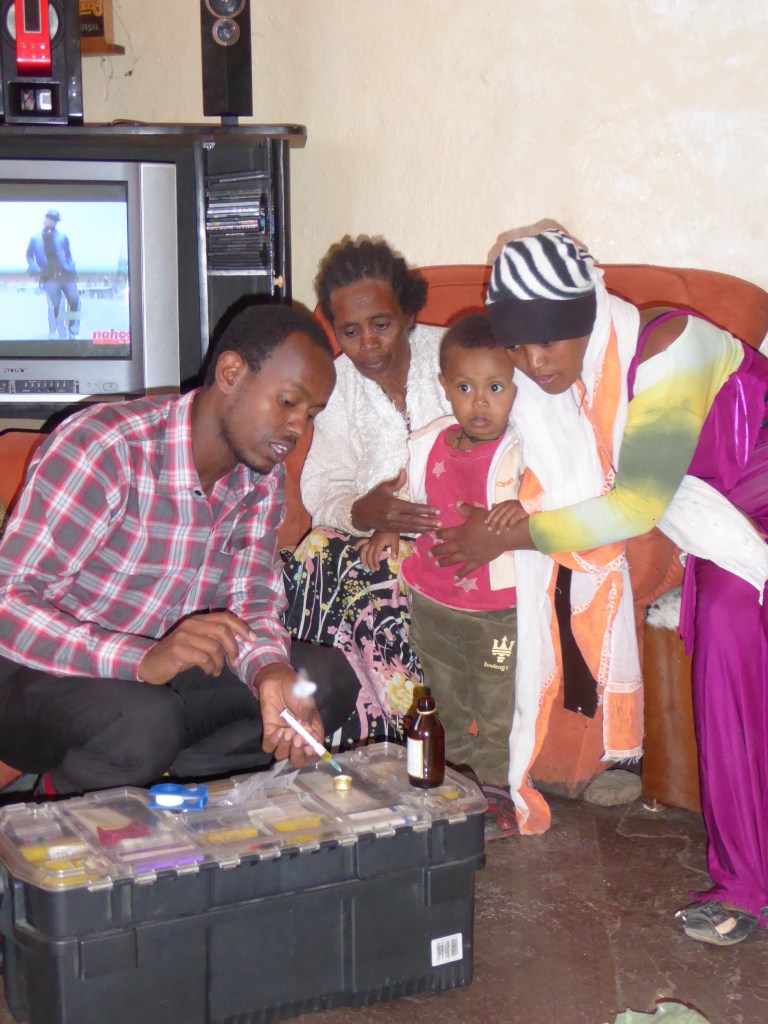
Ephrem teaching a family to administer oral morphine solution to a patient. Photo taken in 2016, when oral morphine was still available in Ethiopia.
  • Training: Ephrem and his staff laid on a workshop for Chaplains and representatives from the Christian Orthodox, Protestant and Muslim communities. Following this a draft training manual is being produced for training religious leaders in supporting terminally ill patients. As part of this work some of Hospice Ethiopia’s patients were questioned about what spiritual care they felt is needed when approaching the end of life. All this will help deliver the individualised care that people approaching the end of life deserve.
  • Following a joint application between Hospice Ethiopia and Hospice Ethiopia UK, True Colours Trust (a UK charity that supports palliative care providers across Africa) is providing funding for a 4 day palliative care training course at Hiwot Fana Hospital in Harar later this month. Harar is a holy Islamic city in eastern Ethiopia and is known for its maze-like alleys and traditional houses decorated inside with flat baskets.
  • Hospice Ethiopia UK and Hospice Ethiopia has recently been approached by Dr Yates from Soddo Christian Hospital (situated in the Oromia part of Southern Ethiopia) to provide palliative care training for their staff. The hospital serves a population of over 20 million people. Planning is in the early stages for this training to be delivered in the autumn when some of HEUK’s trustees will be visiting Ethiopia.

Abena’s Story

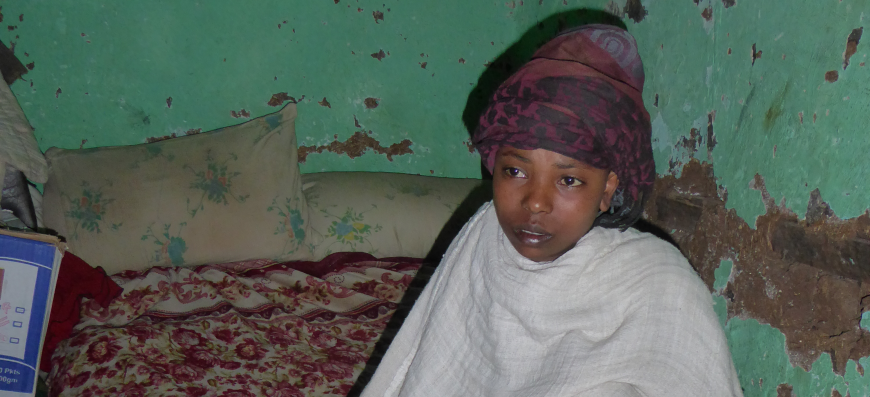
Abena (not her real name) is a 38-year-old married lady with breast cancer. On her first visit Nurse Filagot from Hospice Ethiopia carried out a full assessment of her needs. She had been seen by her local health centre several months ago when the diagnosis had been made but had declined further investigations and treatment. She returned to the health centre when the cancer spread to become an open wound, and was referred to the regional hospital and then on to St Paul’s hospital in Addis Adaba for treatment. This meant she had to travel by bus for over 24 hours to the capital, leaving behind her husband and 3 children, aged 15 (with autism), 10 and 6. She was able to stay with her sister but this involved sleeping on the floor of the sitting room.

The assessment was difficult as she only spoke a regional language (there are over 80 in Ethiopia) and was illiterate, but with her sister’s help Nurse Filagot was able to establish her symptoms. She had suffered for at least 50 days with extensive ‘burning’ pain across her body; the cause of which was unknown. She had local spread of her cancer creating an open wound across her breast. She had received one cycle of chemotherapy at St Paul’s Hospital, leaving her feeling exhausted and nauseous. She was also suffering from a low mood which was evident by her lack of eye contact and general demeanour.

Nurse Filagot established a plan for her care. She gave her a course of amitriptyline 12.5mg daily for her pain and metoclopramide for her nausea. She provided dressings and topical metronidazole for the breast wound. She then explained the risks of neutropenic sepsis (which can be caused by chemotherapy) and spent time listening to her concerns and anxieties. She plans to visit again in a week to monitor her symptoms.

Patient Story: Fetle

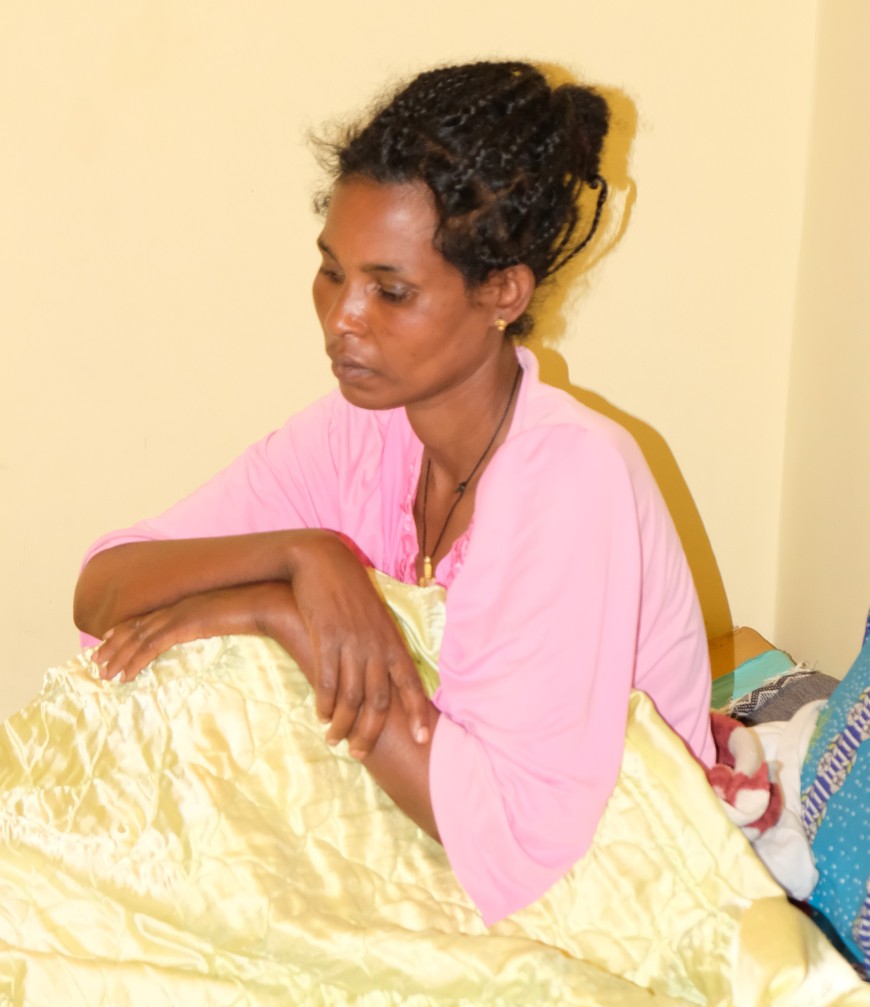
Fetle is 24. She was diagnosed with breast cancer 6 months ago. Sadly the disease had already spread and could not be cured. When she came to us she was suffering with pain in her breast, spine, underarm and left leg. She had no pain killers. The breast cancer had spread through the skin, causing an open wound that was infected. She had become incontinent which, with other symptoms, suggested she had cancer in her spine and was at high risk of becoming paralysed.

Fetle was born several hundreds of miles outside Addis Ababa and been abandoned at birth. She had been brought up by a non-governmental organisation. At 18 she was raped by one of their workers and she subsequently had twins.

Fetle used to work as a cleaner but can’t anymore, due to the pain and other symptoms. As there is no welfare system in Ethiopia she had become entirely reliant on neighbours for food and support.

So what can Hospice Ethiopia do for Fetle?

We are giving Fetle pain killers, antibiotics for her infected wound and steroids to try and prevent paralysis. We will phone her and visit her each week, to review her symptoms and the effectiveness of the medicines.

We are also providing ongoing psychological, spiritual and financial support. £10 per month will be enough for her and her twins to eat properly. We will also help Fetle make plans for her twins, once she cannot care for them herself.