

Successful Jane Austen event raises £1560
We had a fantastic event on Sunday 28th July with the dramatized reading from Jane Austen’s Northanger Abbey at Cromer Hall. The actors/readers were brilliant, the musicians fabulous and the high tea scrumptious. As for the setting – it was simply glorious, and we were lucky to have such wonderful weather. Huge thanks to Benjie and Dido Cabbell Manners for letting us use their beautiful home (and for providing a superb lunch for the workers). Massive kudos to script writer Margy Seale and the fabulous cast. Soprano Emma Nuule and her accompanist John Farmer were a delight, as was Jamie Mumford playing incidental music on his recorder. And then, as ever, there were all the background folk who contributed so much hard work – including the bakers, Kate, Rosie, Elizabeth and Julie and Sue, and the very hardworking tea folk, Claire, Julie, Rebecca, Steph and Rachael. And, of course, many thanks to the wonderful people who came and supported the event – raising £1560 in the process, which will make a huge contribution to support Hospice Ethiopia. The money raised is enough to pay for a specialist nurse looking after 100 patients for three months in Ethiopia.
The 2024 Jane Austen event sold out, as did the 2023 one… if you’d like to know about the 2025 event in time to grab a ticket or two, sign up to the newsletter at the bottom of this page.

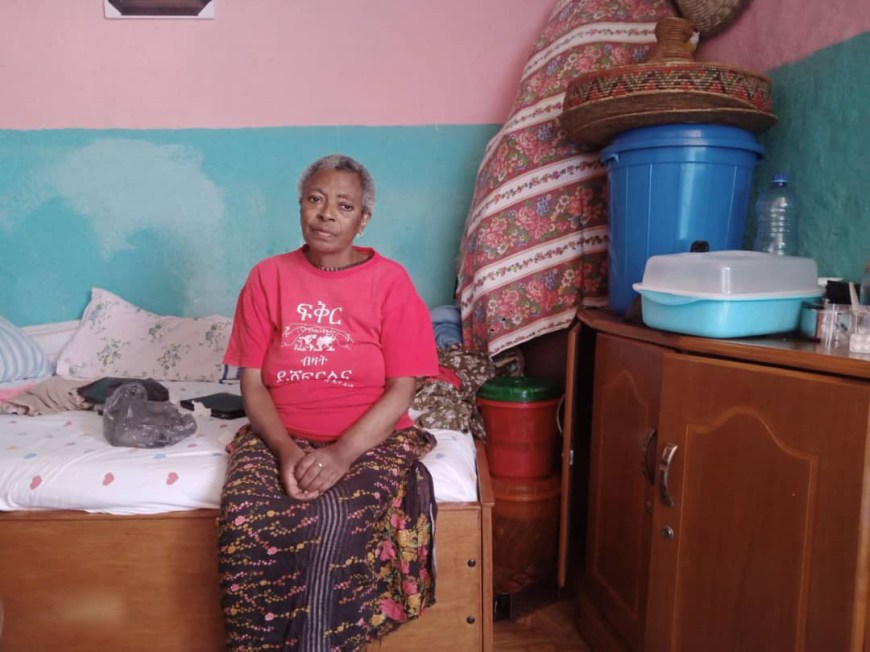
Patient Story: Genet
When we visited Ethiopia in February 2024 we met Genet, a 57 year old spinster. She is a Protestant Christian and has an adopted daughter who had recently been married. Genet lives alone in a rented single room house. Before becoming ill, she had worked in a school, but was now unable to work and had no income, so receives a monthly grant from the Tewolde Medhane Fund (previously known as the Comfort Fund). She learned about Hospice Ethiopia from a friend so she referred herself to Hospice Ethiopia. Prior to this she had received 7 doses of chemotherapy at the Black Lion Hospital for her incurable colon cancer that had spread to multiple sites in her liver. The chemotherapy had made no impact on her disease and she had not been offered any other anti-cancer treatment such as radiotherapy.
Genet had been prescribed tramadol for her pain by the hospital for a neuropathic (nerve) type pain. When she was first assessed by Nurse Kalkidan, her physical problems were abdominal pain, fatigue, reduced appetite, constipation and intermittent vomiting. She had been prescribed a steroid medication for the vomiting by the hospital. During our visit Nurse Kalkidan adjusted her pain killing medication adding in metoclopramide and omeprazole for the nausea along with gabapentin (300mg daily) for the pain and bisacodyl to prevent constipation.
She is being supported spiritually by her religion and church connections. She was counselled by Nurse Kalkidan and encouraged to remain as active as possible (she goes to church and is able to walk around). We explained the difficulties of treating fatigue and advised eating whatever she fancied whenever she felt hungry.
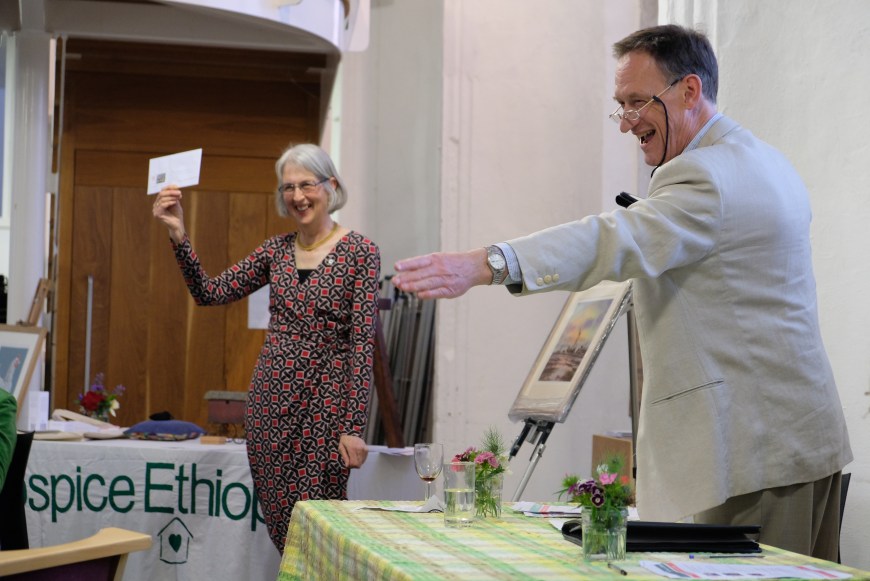
Successful Auction of Promises
Hospice Ethiopia’s wine and cheese and auction of promises was a fantastic evening and raised over £2,700. Every penny of this will go to support Hospice Ethiopia. A massive thank you to the hugely entertaining Mrs Temple, for both her wonderful cheeses and her insightful presentation. Also thanks to the equally entertaining master of ceremonies and auctioneer extraordinaire David Robinson. Yet more thanks to all who donated lots for the auction and prizes for the raffle. Lastly, our thanks goes to our wonderful volunteers who worked so hard to make it all happen and all those who dug deep and bought the lots!
June 2024 news from Ethiopia
Hospice Ethiopia UK’s Chair Sue Mumford has monthly online calls with Director of Hospice Ethiopia UK, Ephrem Abathun. Here is some of the latest news from Ethiopia:
- Ephrem has been in discussions with the Ethiopian Ministry of Health about revising and publishing a new strategic plan for Palliative Care in Ethiopia. Crucially the provision of morphine is included for the first time in the revised plan.
- The Minister of Health has now issued the necessary documents for the Black Lion Hospital to import morphine powder to produce oral morphine liquid. The American Cancer Society has purchased the morphine powder so we are optimistic that oral morphine solution will soon be available to relieve the pain for the dying in Ethiopia. Initially this medicine will be available for patients at Black Lion Hospital before being expanded to other hospitals in Addis Adaba and then to regional hospitals across the country.
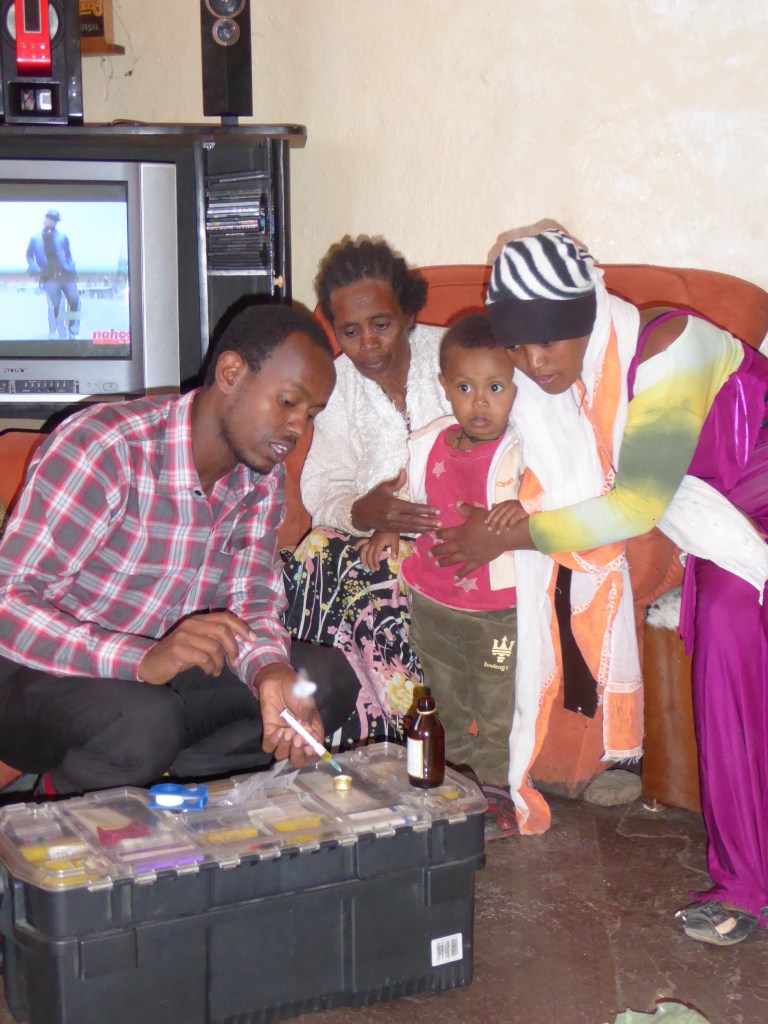
- Training: Ephrem and his staff laid on a workshop for Chaplains and representatives from the Christian Orthodox, Protestant and Muslim communities. Following this a draft training manual is being produced for training religious leaders in supporting terminally ill patients. As part of this work some of Hospice Ethiopia’s patients were questioned about what spiritual care they felt is needed when approaching the end of life. All this will help deliver the individualised care that people approaching the end of life deserve.
- Following a joint application between Hospice Ethiopia and Hospice Ethiopia UK, True Colours Trust (a UK charity that supports palliative care providers across Africa) is providing funding for a 4 day palliative care training course at Hiwot Fana Hospital in Harar later this month. Harar is a holy Islamic city in eastern Ethiopia and is known for its maze-like alleys and traditional houses decorated inside with flat baskets.
- Hospice Ethiopia UK and Hospice Ethiopia has recently been approached by Dr Yates from Soddo Christian Hospital (situated in the Oromia part of Southern Ethiopia) to provide palliative care training for their staff. The hospital serves a population of over 20 million people. Planning is in the early stages for this training to be delivered in the autumn when some of HEUK’s trustees will be visiting Ethiopia.

Doctor receives palliative care training funded by HE UK
Money raised by Hospice Ethiopia UK has been used to fund training for a doctor based in Southern Ethiopia, Dr Juhliad. His interest in palliative care started in 2019 when he received a three day introduction to palliative care at The Black Lion Hospital in Addis Ababa, delivered by Hospice Ethiopia’s Director, Ephrem. Dr Juhliad now works at Yabelo Hospital which is a town in the Oromia region, 580km south of Addis Ababa. Here he sees patients who desperately need symptom management and end-of-life care. With our help this year he has completed the foundation course in palliative medicine at Trivandrum Institute of Palliative Sciences and is now attending a Master Class course that will go on until December 2024. He will go to India for ‘hands-on’ clinical training in November 2024 as part of the course. This is what he told us:
“The hospital where I am based now doesn’t have a specific place dedicated to patients needing palliative care. And it seems difficult to persuade the hospital administrators to integrate palliative care services for now. But I am trying to integrate palliative care practice into my daily routine for patients who might be candidates for such services at a chronic disease medical outpatient department. Moreover, I am intending to launch a free telehealth service for patients needing palliative care through my social media platforms…I am also interested in providing webinars on palliative care for frontline healthcare workers.”

A day in the life of Ephrem Abathun
When the trustees visited Hospice Ethiopia last month, we took the opportunity to ask Hospice Ethiopia’s Director, Ephrem Abathun what a typical working day looked like for him. We thought you might be interested to hear what he said.
His day usually starts about 6am but may be earlier if he has international guests visiting. He aims to leave home around 6.30am after eating some kinche (cracked wheat) or eggs with bread and has an hour’s drive (25km) to the HE premises. Ethiopian coffee (and occasionally tea) is drunk with breakfast, in the morning, after lunch and mid-afternoon. Gullilat Korbu (Finance Officer), Wengi Yared (Programme Manager), and the nurses arrive shortly after him, between 7.30-8am.
Ephrem’s working day begins with reviewing operational activities so that he knows what he has to prioritise and on certain days of the week there are regular weekly meetings for example on Monday mornings he has meetings with the staff and the management team (Wengi Yared and Gullilat Korbu). Lunch is around midday and is always a working lunch. He either brings lunch from home – “spaghetti pasta” or he meets international guests for a working lunch. On Monday afternoons he holds a clinical meeting with the nurses when difficult and distressing cases are discussed. He tries hard to make sure this meeting is not cancelled as it is a good opportunity to share his experience and build good working relationships with his clinical staff.
There a number of things that have to be fitted in around meetings and appointments for example, working on project applications with Wengi, speaking to local partners on the phone for example the Addis Adaba Health Bureau, attending face to face and virtual meetings with donors and partners, and writing reports.
During the last 2 years he has rarely had time to visit patients himself who are registered on the Home Based Care programme but now that doctorate is finished he hopes to have more time to support the nurses carrying out these visits. Certainly Hospice Ethiopia’s patients benefit hugely from his wealth of experience.
Ephrem usually leaves the office around 6-7pm and then has an hour’s drive home, receiving phone calls from staff, partners and others on his way. He tries to eat supper with his wife and 2 girls (aged 9 and 12) when he arrives home, which might be pasta, injera, barley bread and vegetables. Meat (beef) is eaten once or twice a week. (Beef is the cheapest meat in Ethiopia and is cheaper than goat, chicken, lamb and is produced across Ethiopia.) Once his daughters are in bed there is often more work to catch up with.
Ephrem works 5 days a week in theory but at weekends he works at least a further ½ day’s work. He tries hard not to work at all on Sundays so that he can spend time with his family.
This typical day looks pretty straight forward but from our experience working in Ethiopia is challenging. Long traffic jams, intermittent internet, massive paperwork demands by regulatory authorities, lack of internet banking and certainly no internet shopping all demand the patience of a saint. Fortunately Hospice Ethiopia’s Executive Director is one of these!
TRUSTEE REPORT ON VISIT TO ETHIOPIA FEB 24
Please see the full report for Sue, Jamie and Rebecca’s trustee visit to Hospice Ethiopia in February here.
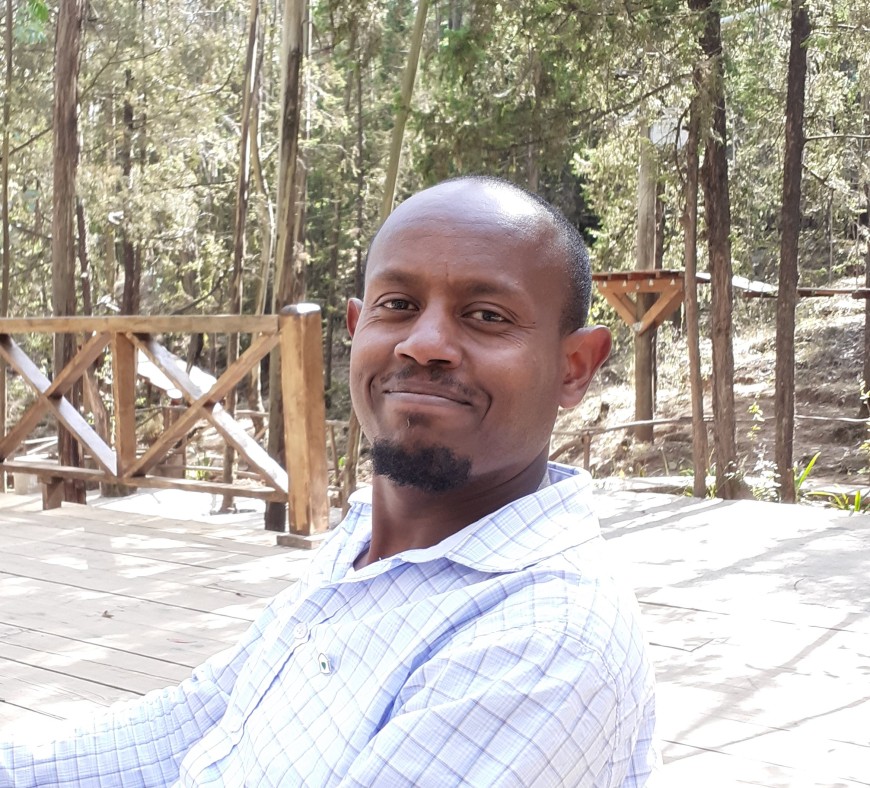
Ephrem features in The Guardian
The Guardian newspaper has recognised what we have known for many years, that the Director of Hospice Ethiopia, Ephrem Abathun, is one of the truly inspirational people alive in the world today! He richly deserves this recognition for his amazing dedication to his work. Read all about him and his work here.
Patient Story: Abigia
Abigia, a female aged 29, was diagnosed with rectal cancer 2 years ago when she was referred to the Black Lion Hospital (BLH) with abdominal pain and a bloody perineal discharge.
She was treated with surgery (a colostomy was formed after attempted tumour resection failed) followed by radiotherapy and 6 cycles of chemotherapy. When treatments proved unsuccessful for her cancer which had spread from the primary site, she was referred to Hospice Ethiopia for palliative care.
Her social history is tragic and her physical problems are complex. She is of protestant faith and was previously living with a Muslim husband and a son, aged 12. However, her husband left her without support and moved, with her son, to Harar (a city in eastern Ethiopia). Her parents live in Addis Ababa but there is no contact with them (they do not answer her telephone calls), likewise, her 12-year-old son has declined visiting her.
She has no neighbours to care for her and is too weak to cook for herself, so she is emaciated and weak, and confined to her bed in her single room (approximately 3m X 4m) house. She is under threat of eviction as she is destitute and her landlord is fearful of her dying in his property.
Until the visit, she had reduced her food intake as she had no stoma appliances and thus hoped to minimise her bowel actions via the colostomy. She had significant local pelvic pain and an open perineal wound with odorous discharge. She was taking tramadol 100mg twice daily and amitriptyline 12.5mg at night for the pain but these gave little respite. The BLH had prescribed injectable morphine 5mg which should be administered 4 hourly to work effectively. However, an injection required a visit to the health centre (volunteer drivers had taken her 600m to the health centre on an ad hoc basis) so injections were infrequent but had helped the pain for a few hours.
The care plan from Hospice Ethiopia’s nurses included ongoing financial support from the Tewolde Medhane fund, provision of medicines and stoma bags, counselling from nurse Kalkidan (who also donated her lunch) and a follow up visit later in the week. She declined being photographed and not surprisingly was tearful during the visit.
 Hospice Ethiopia UK