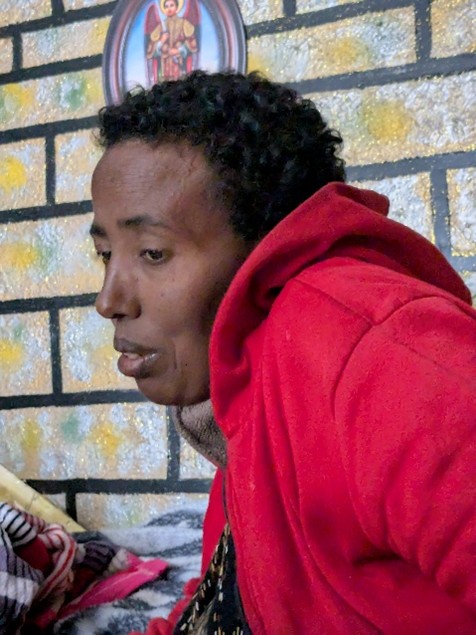
Patient story: Genzeb

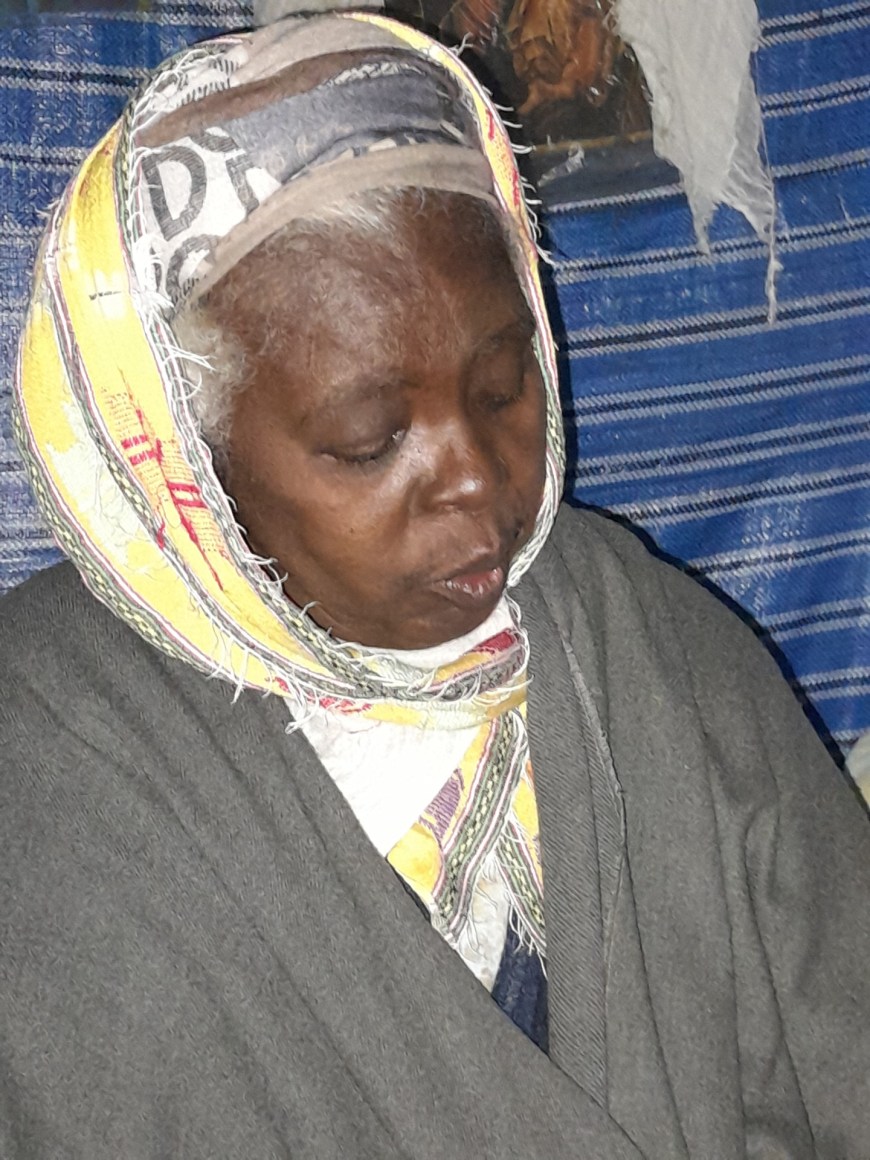
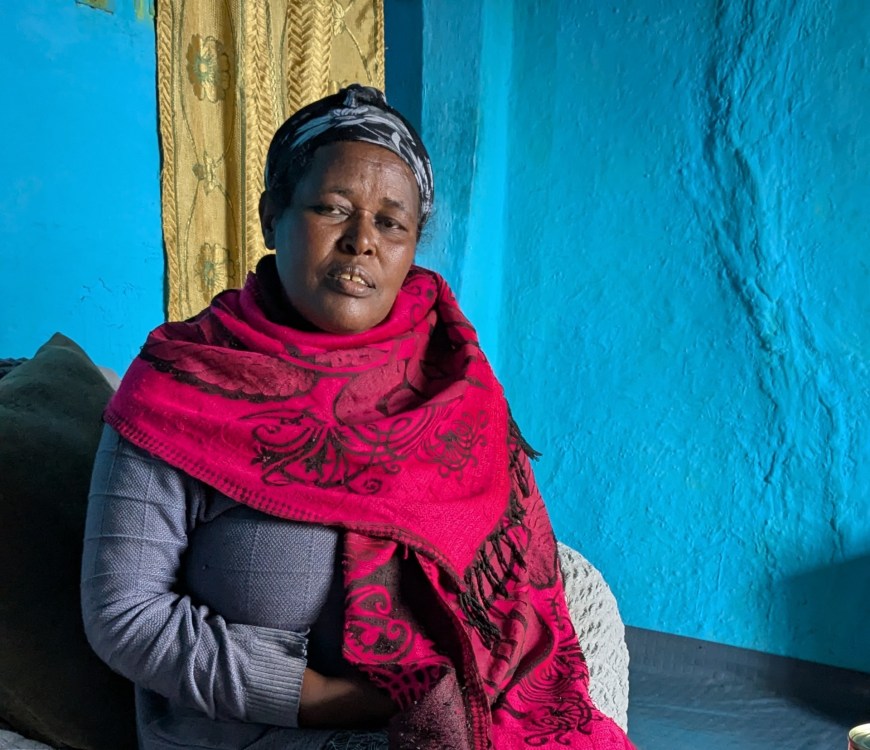
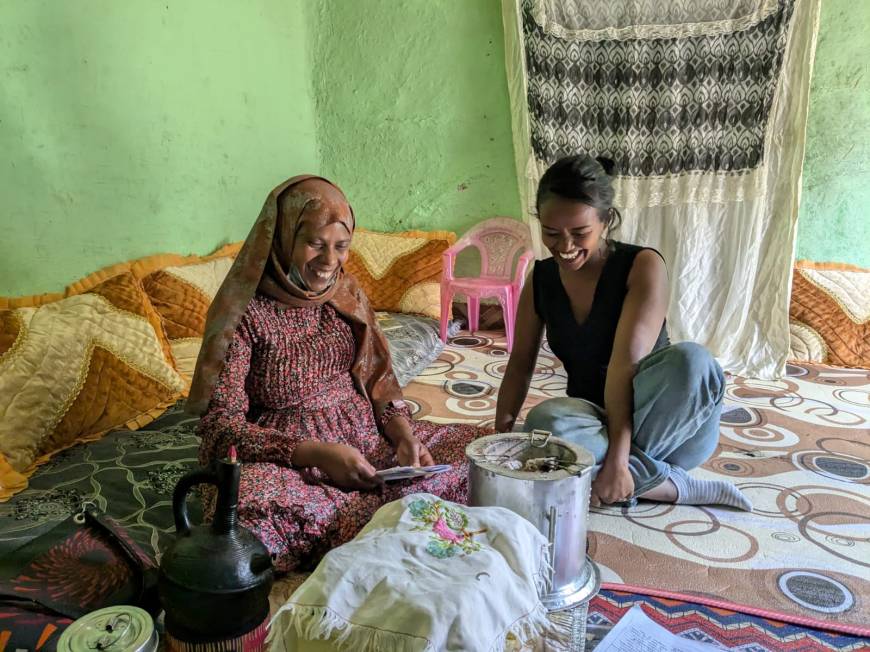
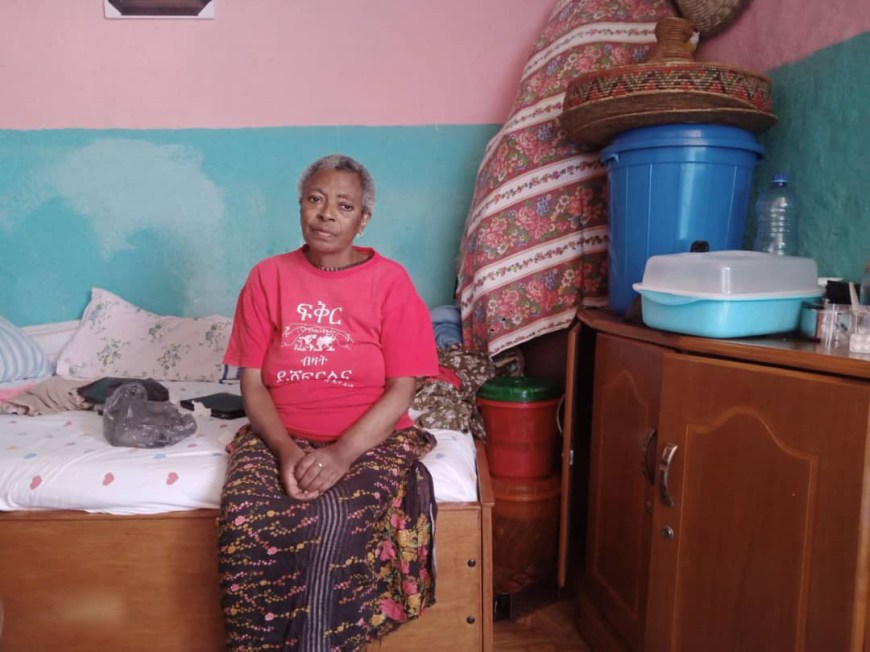
Genzeb* is a 45 year old woman with cervical cancer which was diagnosed 4 years ago. She received radiotherapy as surgery was not an option. Since receiving radiotherapy she has become incontinent and has radiation induced colitis (damage to the large intestine)**. 3 weeks prior to our visit she had received a 2 unit blood transfusion at the Black Lion Hospital, as the colitis had resulted in her being anaemic.

She was prescribed mesalazine suppositories to try and reduce the rectal bleeding. These are expensive, so her brothers and sisters pay for these as she is unable to afford them. She also has metronidazole vaginal douches to reduce the odour from her tumour. She receives a monthly grant from the Tewolde Medhane Comfort Fund, food support and sanitary products.

Genzeb is divorced and lives alone in a ‘condominium’. These are flats built by the government which are rented but can then be bought. Genzeb’s father had bought their flat but had died 10 months previously. There is now disagreement between Genzeb, who had lived with and cared for her father, and her 6 siblings about who owns the flat.

Genzeb follows the Christian Orthodox Tawahido religion and is part of a group of a spiritual and community support group with 12 members (Tsiwa). The group meets monthly to honour a saint, sharing a meal and engaging in prayer and singing. The small shrine in her house rotates to the other members of the group each month. Genzeb had set up the group because her brother had survived a serious accident.

When asked what difference Hospice Ethiopia had made to her life she replied “previously I couldn’t afford to get to my appointments at the hospital. I have nobody else who cares for me and wouldn’t be alive without Hospice Ethiopia’s support. Your service does a lot of important things, for example visiting people in their own homes. It is an example that other organisations should follow”.

*Not her real name

**It is reported that to increase the number of patients treated by radiotherapy and to reduce the waiting list at the Black Lion Hospital, the dose of radiotherapy per session was increased and the length of the course reduced. This has now been stopped due to the sharp increase in the side effects experienced by the patients.

Patient video: Kalkidan

Kalkidan, a patient of Hospice Ethiopia in Addis Ababa talks about her diagnosis and the difference that the care she has received from Hospice Ethiopia has made to her life.

Please note permission is sought prior to taking all photographs and videos. Names have been changed to protect privacy. Our thanks to Alan Miller for producing the video. 

Patient story – Afework

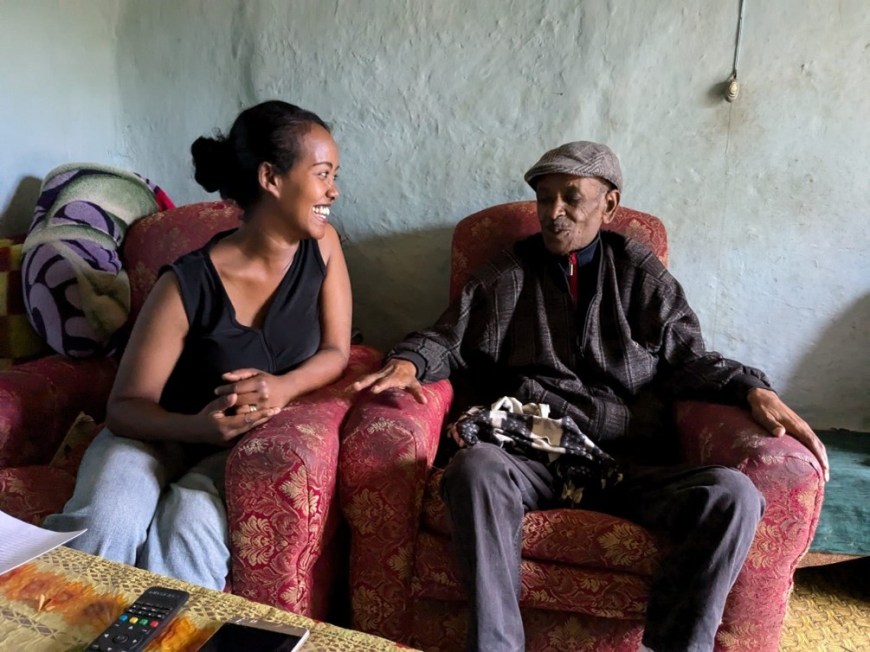
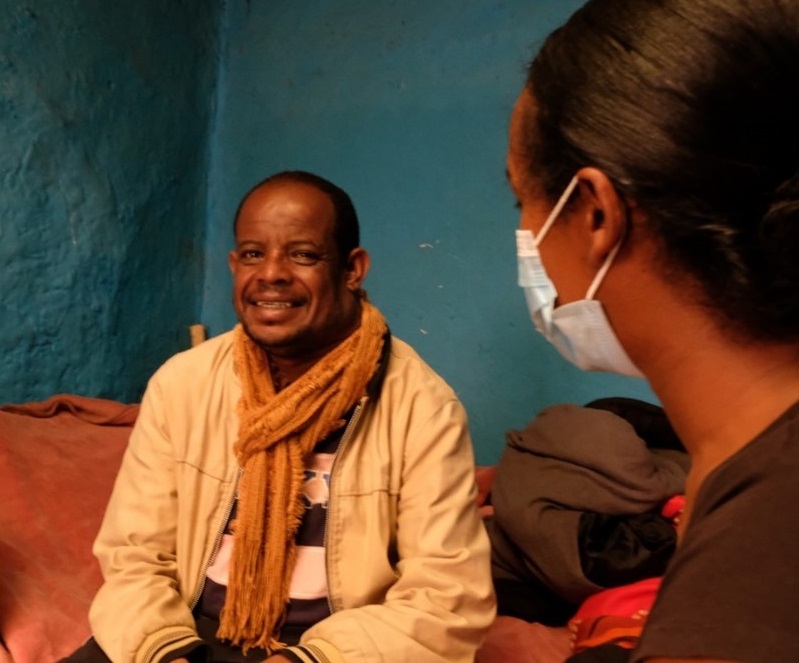
Afework is a 60 year old Christian Orthodox man with throat cancer. It was diagnosed a year ago when he noticed discharge from his nose. Following diagnosis, he received 34 treatments of radiotherapy and 8 cycles of chemotherapy. Initially, post-treatment, he had severe radiotherapy burns to his neck (we were shown a photo) and the skin was very damaged. This has now healed but he continues to have a very dry mouth and therefore difficulty swallowing. He had lost weight over the last year due to this.

Afework lives with his wife and has 4 grown up children. He worked as a driver for 32 years and is hoping to return to work, as there was no sign that the cancer had spread on a recent CT scan.

He was not taking any regular medication although we suggested he try chewing gum to stimulate his own saliva (artificial saliva is not available in Ethiopia). Kalkidan checked his mouth and there was no sign of candida (thrush) infection. She discussed his diet with him, particularly bearing in mind he looked (and has been told) that he is anaemic. He receives food support from Hospice Ethiopia in the form of rice, oats and teff which his wife can make into a “porridge”. A doctor had advised him to get Plumpnet (a high calorie drink) from the local Health Centre. However, when he went to the Health Centre he was told it is only available for mal-nourished children.

The nurses from Hospice Ethiopia will continue to offer him and his wife advice and support.

Patient story: Yosias

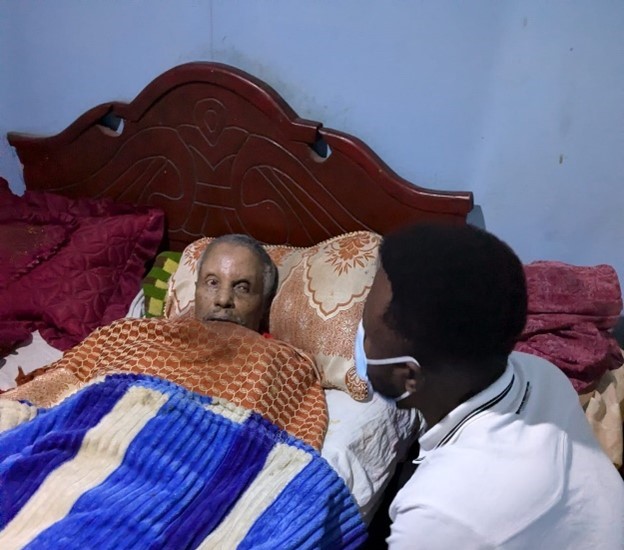
Yosias is a 70-year-old man who follows the Christian Orthodox religion. He lives with his wife and has three grown-up children, who visit occasionally.

His diagnoses include leprosy (of which his wife is unaware), asthma and hypertension which caused a stroke leaving him bed-bound in a small room for the last 9 years – he has not left this room. He stopped taking his leprosy medication following his stroke.

He was identified as having palliative needs by a Community Worker. He is paraplegic and completely immobile following the stroke and nerve damage from leprosy. This nerve damage has resulted in hand deformities which means he needs to be fed by his wife. He has a sacral pressure sore and multiple ulcers on his hugely swollen legs. He also suffers from nerve pain in his legs and urinary incontinence.

The nerve-type pain improved when he was prescribed amitriptyline at night. The Hospice nurses also keep him supplied with sheaths for his urinary incontinence along with pads and dressings for his sores.

Due to minimal income, he receives food support from Hospice Ethiopia. A food support service has been created due to the high national inflation rate, causing starvation). To have survived 9 years in bed with multiple serious health conditions is a tribute to his carers, notably his wife and support from regular visits from Hospice Ethiopia.

Patient story: Berknesh

Berknesh is a 40 year old woman who was diagnosed with HIV 4 years ago, not long after her husband died (he was 30 years older than her). He was Romanian and they had met at the Romanian embassy where they both worked. After their marriage, they lived in a comfortable house, with nice clothes and possessions. They had a son together, who is now aged 10.

Four and a half years ago, Berknesh’s husband was involved in a serious car accident and could no longer work. He subsequently died from his injuries. After her husband’s death she became depressed and bit by bit had to sell their possessions to survive. In order to earn some money, Berknesh became a sex worker which is how she caught HIV. She declined to take anti-retroviral medication for her disease as she felt the disease was a punishment from God for her sex work. She now lives in a one-room house and is struggling to pay ETB 3,000 (£42) per month in rent. Last year she became unwell from HIV and was so desperate that she went to the local woreda office (council), where they gave her some food support and referred her to Hospice Ethiopia. After several visits from Hospice Ethiopia’s nurses, she was persuaded to take her anti-retroviral medication, and her condition improved, but she says she feels ashamed of the way she looks (she has lost weight, has thinned hair, and skin nodules) and so has no contact with her family and former friends. She receives financial and food support from Hospice Ethiopia. Her mood remains low as she constantly thinks about all the things she has lost since her husband died. She has contacted the Romanian embassy about receiving her husband’s pension but has been told she does not have the right documentation to claim his pension. She has no contact with her husband’s family in Romania including his older son from a previous marriage.

Kalkidan spent time talking with Berknesh, providing psychological support and encouragement. Long-term financial support from Hospice Ethiopia’s Tewolde Medhane fund is not sustainable. As Berknesh’s disease is now stable on medication, she needs to find employment as her prognosis is good.

Patient story: Kia

Jamie and Sue visited Kia during their recent trip to Addis Adaba. She is a 35 year old female patient with breast cancer. She follows the Muslim faith from which she derives great spiritual support.

She received her diagnosis 4 years ago and following a biopsy she underwent a left mastectomy at the Tikur Anbessa Specialized Hospital (TASH), and subsequently received 8 cycles of chemotherapy. In June 2024 she developed vaginal bleeding and underwent further surgery for ovarian cancer, along with an endometrial polyp. The ovarian cancer is a probable secondary cancer to the original breast cancer. She has been advised that further chemotherapy will not be beneficial.

She lives with her husband and 3 children aged 9, 8, and 5 in a single room house. Her husband sells fruit and vegetables from a small road-side stall. Her 8 year old daughter has severe life-long disabilities. She is unable to walk, talk, or feed herself so needs round the clock care but does go to a local school for special needs during weekdays. Kia receives a monthly grant from the Tewolde Medhane fund and intermittent food support from Hospice Ethiopia.

She has been prescribed anastrozole (hormone treatment) for her breast cancer, which is giving her menopausal type symptoms. She takes ibuprofen as required for back pain and also Sildenafil for Reynaud disease-type symptoms of her fingers. This medication is usually prescribed for male impotence and we shared some giggles as we suggested keeping it away from her husband!

Despite the very difficult health, family, and financial situation, Kia was cheerful and at peace with herself. She commented she would not be able to cope without the support from the team from Hospice Ethiopia.

Patient Story: Genet

When we visited Ethiopia in February 2024 we met Genet, a 57 year old spinster. She is a Protestant Christian and has an adopted daughter who had recently been married.  Genet lives alone in a rented single room house. Before becoming ill, she had worked in a school, but was now unable to work and had no income, so receives a monthly grant from the Tewolde Medhane Fund (previously known as the Comfort Fund). She learned about Hospice Ethiopia from a friend so she referred herself to Hospice Ethiopia. Prior to this she had received 7 doses of chemotherapy at the Black Lion Hospital for her incurable colon cancer that had spread to multiple sites in her liver. The chemotherapy had made no impact on her disease and she had not been offered any other anti-cancer treatment such as radiotherapy.

Genet had been prescribed tramadol for her pain by the hospital for a neuropathic (nerve) type pain. When she was first assessed by Nurse Kalkidan, her physical problems were abdominal pain, fatigue, reduced appetite, constipation and intermittent vomiting. She had been prescribed a steroid medication for the vomiting by the hospital. During our visit Nurse Kalkidan adjusted her pain killing medication adding in metoclopramide and omeprazole for the nausea along with gabapentin (300mg daily) for the pain and bisacodyl to prevent constipation.

She is being supported spiritually by her religion and church connections. She was counselled by Nurse Kalkidan and encouraged to remain as active as possible (she goes to church and is able to walk around). We explained the difficulties of treating fatigue and advised eating whatever she fancied whenever she felt hungry.

Patient Story: Yoseph

Yoseph, aged 36, lives alone and is an Orthodox Christian. He used to work as a guard and a driver on a compound but he had to abandon his career in driving as was unable to turn his head. He went to the Black Lion Hospital in Addis Adaba with a lump in his neck and was diagnosed with a nasopharyngeal cancer which had spread locally. He received only 2 cycles of chemotherapy as he was unable to pay for any further treatment. At his visit from Nurse Kalkidan, he had an ongoing odorous discharging sinus and a huge mass on the left side of his neck with secondary spread to the skin as far down as his clavicle (collar bone).

Although living alone, Yoseph has significant physical and psychological support form a network of nearby friends. His son lives with his mother and some contact remains with the patient. His voice is hoarse (probably due to vocal-chord paralysis) but interestingly he complains of no pain and the only treatment at present is herbal. Nurse Kalkidan advised him to reconsider further cancer treatment (radiotherapy might be of benefit). Apart from daily topical metronidazole which has controlled the odour, he has not been prescribed any other treatment or medication (except herbal treatment).

Hospice Ethiopia’s nurses will provide ongoing psychological support.

Patient Story: Abigia

Abigia, a female aged 29, was diagnosed with rectal cancer 2 years ago when she was referred to the Black Lion Hospital (BLH) with abdominal pain and a bloody perineal discharge.

She was treated with surgery (a colostomy was formed after attempted tumour resection failed) followed by radiotherapy and 6 cycles of chemotherapy. When treatments proved unsuccessful for her cancer which had spread from the primary site, she was referred to Hospice Ethiopia for palliative care.

Her social history is tragic and her physical problems are complex. She is of protestant faith and was previously living with a Muslim husband and a son, aged 12. However, her husband left her without support and moved, with her son, to Harar (a city in eastern Ethiopia). Her parents live in Addis Ababa but there is no contact with them (they do not answer her telephone calls), likewise, her 12-year-old son has declined visiting her.

She has no neighbours to care for her and is too weak to cook for herself, so she is emaciated and weak, and confined to her bed in her single room (approximately 3m X 4m) house. She is under threat of eviction as she is destitute and her landlord is fearful of her dying in his property.

Until the visit, she had reduced her food intake as she had no stoma appliances and thus hoped to minimise her bowel actions via the colostomy. She had significant local pelvic pain and an open perineal wound with odorous discharge. She was taking tramadol 100mg twice daily and amitriptyline 12.5mg at night for the pain but these gave little respite. The BLH had prescribed injectable morphine 5mg which should be administered 4 hourly to work effectively. However, an injection required a visit to the health centre (volunteer drivers had taken her 600m to the health centre on an ad hoc basis) so injections were infrequent but had helped the pain for a few hours.

The care plan from Hospice Ethiopia’s nurses included ongoing financial support from the Tewolde Medhane fund, provision of medicines and stoma bags, counselling from nurse Kalkidan (who also donated her lunch) and a follow up visit later in the week. She declined being photographed and not surprisingly was tearful during the visit.

The Big Give 2023 ends soon!

We are really delighted with the response so far to our Big Give project 2023 – the donation window is ending soon at midday on Tuesday 5th December. If you haven’t had a chance to donate yet, don’t worry – there are still match funds available so every pound you donate will mean £2 for Hospice Ethiopia. We have raised a fantastic £7,710 so far; please help us reach our target of £11,760 to enable the hard-working staff in Ethiopia to get a pay rise.

Please visit the Big Give website here to donate.

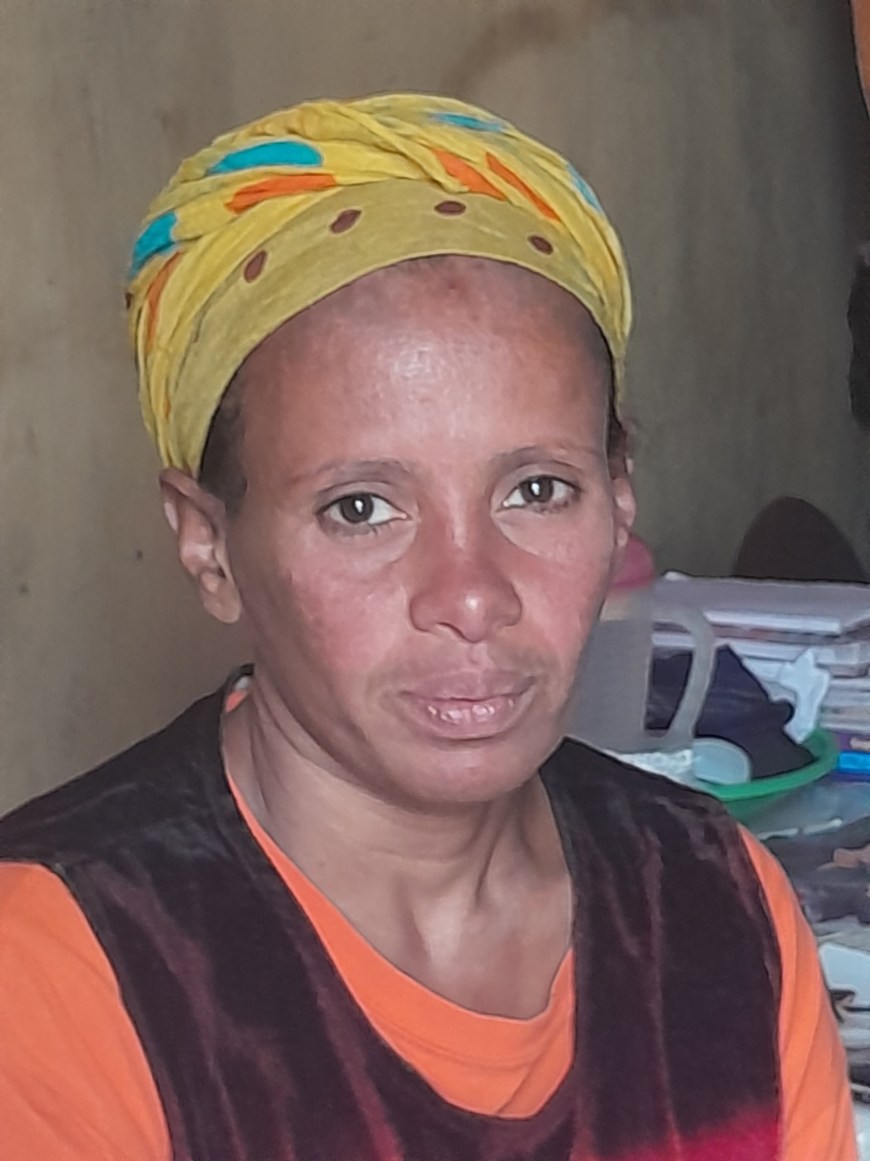
Your donation will enable people like Mariam (not her real name; see photo) to have ongoing visits from Hospice Ethiopia’s nurses to help her cope with her depression and anxiety. She is aged 35 and was diagnosed with bowel cancer in the United Arab Emirates (UAE) where she was a migrant worker. She paid for surgery to remove the cancer and a colostomy was formed. The UAE government does not provide free health care to migrant workers so she returned to Addis Ababa and has had 10 cycles of chemotherapy at the Tikur Anbessa hospital. Mariam had to buy these drugs from the hospital pharmacy and if they were out of stock she had to go outside the hospital to a pharmacy to try and buy the necessary drugs.

The chemotherapy has caused ongoing diarrhoea which has been extremely problematic to manage especially when she did not have any stoma bags. Fortunately, a new supply of stoma bags was brought to Hospice Ethiopia by the HEUK trustees.

Mariam is effectively destitute and therefore lives with her mother (who also has terminal cancer) in a one-room house along with her infant niece. She is unable to work due to her illness and relies on a monthly grant from the HE Tewolde Medhane Fund (formerly the Comfort Fund) to buy food, medicines and other essential items.