Patient Story: Omari

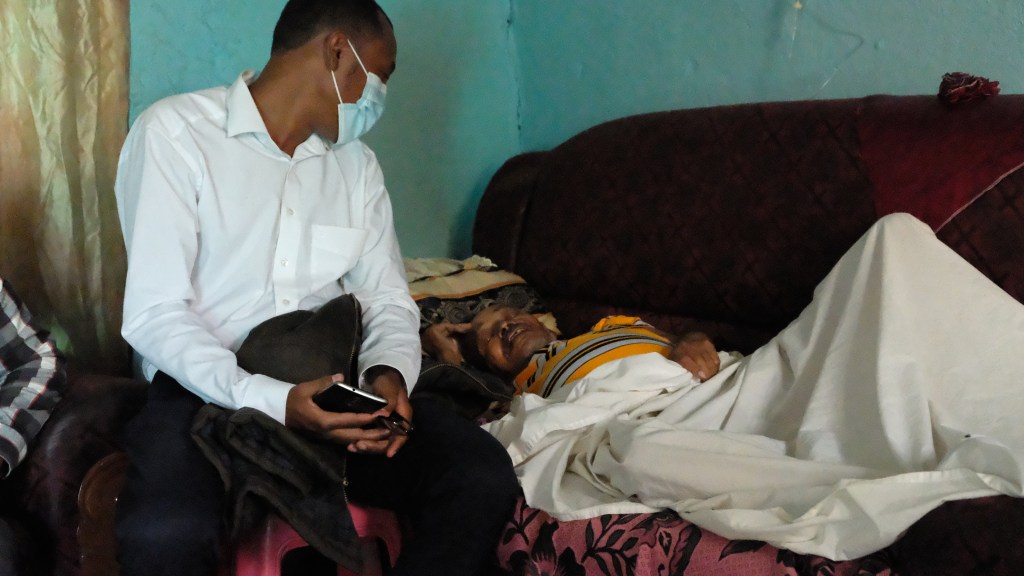
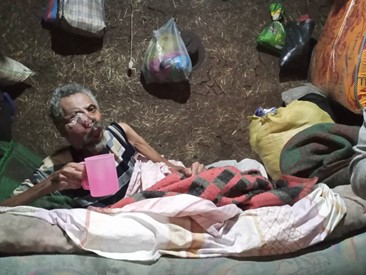
Omari is a 40 year old male with HIV and diabetes. He was diagnosed with an abdominal tumour 10 years ago and underwent surgery. After the surgery he became partially paralysed; the exact cause of this is unknown but may be due to spinal cord compression from spinal metastases (secondary cancer). The Hospice Ethiopia team became involved in his care a year ago to control his pain and help him with his psychosocial issues. A few months ago he had a fall and since that time he has been unable to walk and so is bedbound and incontinent. He complained of pain in his legs and was prescribed a number of medications to try to control the pain; although none have been very effective.

Omari is now unable to straighten his legs and finds moving his legs exacerbates the pain; in addition he has suffered from bedsores for several months. Recently he has developed 2 new sores on his lower back which were caused by a hot water bottle as he has numbness in that area so did not realise how hot the bottle was.

He lives in a small Kebele house (social housing) with his wife and their 2 children, aged 3 and 7. His family have employed a maid to care for him. He has a strong Christian Orthodox faith and as he can no longer get to church the priest visits him at home and prays with him.

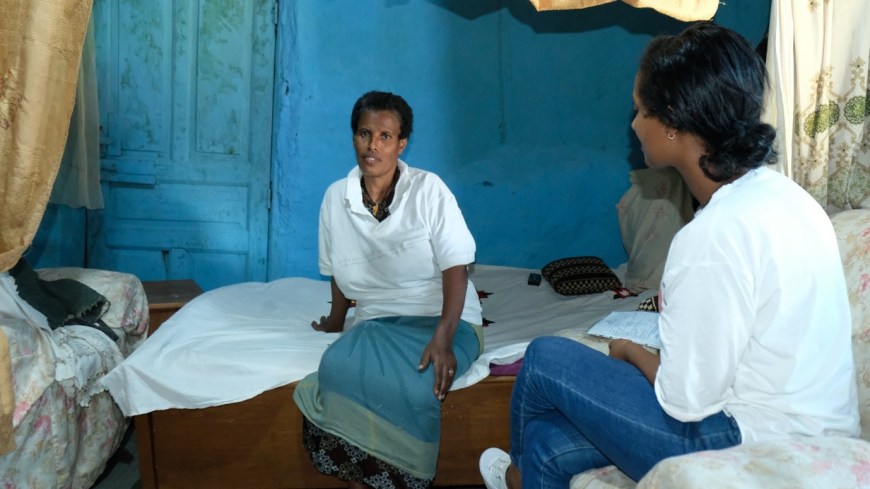
Plan: He agreed to restart tramadol for the pain in his legs. Nurse Filagot will provide a sheath (donated by Hospice Ethiopia UK) to ease the problem of incontinence. The family are currently buying pads which are expensive ETB 2,000 (£33 approximately) per pack of 24. The nurses from Hospice Ethiopia will continue to visit him regularly. Filagot had a good rapport with Yonas, listening to him attentively and quietly talking with him.

Ayana’s Story

Ayana (not her real name) is a 38 year old Christian Orthodox woman, who was diagnosed with HIV 9 years ago. She has been prescribed Highly Active Antiretroviral Therapy (HAART) for her HIV disease which she gets free from the local health centre. Three years ago she was diagnosed with vulval cancer and subsequently received 11 cycles of chemotherapy (after having first tried Holy water). She is now waiting for radiotherapy to control her pain, vulval swelling, bleeding and discharge. She is unable to sit comfortably despite taking tramadol 50mg twice daily for pain. Nurse Filagot talked with her about increasing the tramadol but as the ceiling dose is 50mg 4 times daily (QDS) Nurse Filagot was worried about what she will be able to prescribe when the pain gets worse (as oral Morphine is unavailable). Ayana also complained of neuropathic pain down her right leg, so Filagot decided to arrange for amitriptyline 12.5mg at night to be prescribed. Amitriptyline will hopefully help with her sleep too.

Ayana’s mobility is much reduced due to the vulval swelling and pain rendering her housebound and dependent on her family. In addition, she has a poor appetite and local skin irritation when passing urine. She lives with her parents and does not have any children. She receives food support from Hospice Ethiopia as she had stopped working as a cleaner due to the progression of the disease.

Abay’s story

Abay (not his real name) is a 76 year old man with advanced liver cancer and kidney failure. There is no surgery available in Ethiopia for this condition so the only option for him is to receive management of his symptoms so that he will die peacefully. He has suffered from recurrent ascites (fluid collecting in his abdominal cavity), which has been drained several times in hospital. He was prescribed medicines to try and stop the fluid recurring but these had to be stopped due his poor kidney function. His pain killer (Tramadol) has also had to be reduced as he was becoming sleepy which was probably due to the kidneys not excreting the drug properly, so it was accumulating in the body. However, his abdominal pain has returned. He had been prescribed dexamethasone for his poor appetite but as there was no improvement it was also discontinued.  Hospice Ethiopia will continue to manage Abay’s complex symptoms and support his attentive wife and daughter. 

Hospice Ethiopia UK’s fundraising events in 2023 will raise money so that more people like Abay can be cared for at home in Ethiopia.

Abena’s Story

Abena (not her real name) is a 38-year-old married lady with breast cancer. On her first visit Nurse Filagot from Hospice Ethiopia carried out a full assessment of her needs. She had been seen by her local health centre several months ago when the diagnosis had been made but had declined further investigations and treatment. She returned to the health centre when the cancer spread to become an open wound, and was referred to the regional hospital and then on to St Paul’s hospital in Addis Adaba for treatment. This meant she had to travel by bus for over 24 hours to the capital, leaving behind her husband and 3 children, aged 15 (with autism), 10 and 6. She was able to stay with her sister but this involved sleeping on the floor of the sitting room.

The assessment was difficult as she only spoke a regional language (there are over 80 in Ethiopia) and was illiterate, but with her sister’s help Nurse Filagot was able to establish her symptoms. She had suffered for at least 50 days with extensive ‘burning’ pain across her body; the cause of which was unknown. She had local spread of her cancer creating an open wound across her breast. She had received one cycle of chemotherapy at St Paul’s Hospital, leaving her feeling exhausted and nauseous. She was also suffering from a low mood which was evident by her lack of eye contact and general demeanour.

Nurse Filagot established a plan for her care. She gave her a course of amitriptyline 12.5mg daily for her pain and metoclopramide for her nausea. She provided dressings and topical metronidazole for the breast wound. She then explained the risks of neutropenic sepsis (which can be caused by chemotherapy) and spent time listening to her concerns and anxieties. She plans to visit again in a week to monitor her symptoms.

Neela’s Story

Neela is 60 and has been a widow for many years. She lives alone and has 3 surviving adult sons, however her only daughter pre-deceased her. Her neighbours care for her.

She has longstanding diabetes and developed low abdominal pain 5 years ago. She was diagnosed with cervical cancer and treated with radiotherapy at the Black Lion Hospital in Addis Adaba. She has been re-referred for further radiotherapy but is unlikely to receive it as there is only 1 machine working in Addis Adaba and the waiting list is lengthy.

She was referred to Hospice Ethiopia just over a year ago with significant pain issues. Her pain level was then successfully reduced with paracetamol and amitriptyline (free of charge). Her mobility has now deteriorated and she is sad that she can no longer attend her Orthodox church. However, she is pleased she is still able to make injera-the traditional Ethiopian flat bread.

Sister Filigot from Hospice Ethiopia spent significant time exploring her concerns and she agreed to continue taking regular paracetamol 4 times daily and to increase her amitriptyline tablet at night. Sister Filagot planned to ring her in 5 days to review the effectiveness of increasing the amitriptyline.

Makda’s story

Makda is 40 and has breast cancer (the most common cancer in Ethiopia). Following her diagnosis, she received surgery followed by chemotherapy. However, the chemotherapy had to be discontinued as government funding for the Taxol was stopped. To control her pain she was prescribed tramadol and amitriptyline until tramadol also became unavailable for a while.

She is married with 2 adult daughters, living in their own home. Over the 2 weeks prior to our visit her husband and children had aggressively and abusively abandoned her. They had moved out but had returned the previous day and threatened to kill her to obtain the house for themselves. Previously they had also visited and broken the glass in the front door & tried to damage the “utilities”. Although Makda had called the police to report this there had been no response yet. She remained in a high state of distress and anxiety having being told by them that she was ‘worthless and dying’, and she felt she had been ‘thrown away’. Her only carer is her 8 year old niece living with her; the nurses from Hospice Ethiopia are visiting her twice a week and providing medicines, psychological care and the Comfort Fund as she now has no income. She has a strong religious faith and a moving prayer was said by Ephrem which she valued.

Negasi’s Story

Negasi* was a 55-year old man living in a rented house with his wife and 7 year old daughter. He was referred by the Black Lion Hospital to Hospice Ethiopia with a diagnosis of nasopharyngeal (back of the nose and throat) cancer. On the nurse’s first visit to Negasi, he was bed bound and in severe pain causing poor sleep; he was also unable to swallow due to the mass, and had a huge swollen wound on his face causing gross disfigurement with accompanying odour. He was unable to work resulting in serious socioeconomic problems. and his wife was unemployed.

The nurse from Hospice Ethiopia arranged for him to receive morphine and other medications for his pain. The team gave him nursing care for example mouth care and wound care, and provided medical supplies, and taught his wife how to care for him. In addition, the team provided him with food support and emotional support.

After this care was put in place, he was able to sleep with his pain and other symptoms controlled. The food support helped to relieve their immediate basic needs. As Negasi approached the end of his life, the input from the team increased providing additional support for his wife as she struggled to cope with her husband’s deterioration and care for their daughter. Negasi died three months after the Hospice Ethiopia team became involved in his care. The nurses are providing ongoing bereavement support for the family.

*Not his real name.

Negasi in his bed at home, free from pain and able to swallow small amounts of liquid again

aisha’s story

Aisha* was a 40-year-old woman recently diagnosed with breast cancer. She was divorced and lived with her son and daughter. Her illness progressed rapidly and she developed a fungating breast wound. She refused all treatments for her cancer and preferred to use holy water. Aisha used to work as a prostitute but could no longer earn money this way. Her children worked as daily labourers but they did not earn enough to cover their daily living costs and their mother’s medical care costs.

 Aisha was distressed by her breast pain, fatigue, constipation, bed sore and her breast wound when the hospice team met her. She was also sad, anxious and ashamed of the odour from her breast wound

The Hospice Ethiopia team provided her with advice and medication for her pain and other symptoms. They cared for her wounds and provided wound care supplies such as gauze, cleaning solution and gloves along with a small monthly sum of money from the Comfort Fund. The nurse taught Aisha and her children how to care for her wounds at home. Furthermore, the nurse provided emotional support and reassured her that Hospice Ethiopia would keep providing the care to the end of her life. This care and support helped Aisha to have comfortable days, maintain her dignity and feel much better. Her symptoms were managed, the smell from the wound was controlled. Aisha died with dignity and relief a few weeks later.

*Not her real name

Patient Story: Hewyot

Hewyot was referred to Hospice Ethiopia by an Elder Leader. 70 years old, she had extreme pain in her right lower leg. Her distress was palpable, she was shaking uncontrollably, breathing rapidly, confined to her bed, her pulse was sky high, she was dehydrated and her mouth was sore.

She was also a diabetic and had been referred to the government hospital for control of the disease, but hadn’t gone as her son was busy at work. Nothing had been prescribed for her pain, and its cause was difficult to ascertain; it might have been a prolapsed disc.

Our medics visited Hewyot and gave her two different types of pain killer (Tramadol and Amitriptyline) and an antifungal gel (miconazole) for her mouth. We encouraged her to drink lots of water and go to hospital for control of her diabetes.

We returned two days later and found a completely different woman, smiling, relaxed and able to walk around her home. She had no pain and had been to hospital for management of her diabetes. She is receiving ongoing follow-up from Hospice Ethiopia.

Heywot-after

Patient Story: Fetle

Fetle is 24. She was diagnosed with breast cancer 6 months ago. Sadly the disease had already spread and could not be cured. When she came to us she was suffering with pain in her breast, spine, underarm and left leg. She had no pain killers. The breast cancer had spread through the skin, causing an open wound that was infected. She had become incontinent which, with other symptoms, suggested she had cancer in her spine and was at high risk of becoming paralysed.

Fetle was born several hundreds of miles outside Addis Ababa and been abandoned at birth. She had been brought up by a non-governmental organisation. At 18 she was raped by one of their workers and she subsequently had twins.

Fetle used to work as a cleaner but can’t anymore, due to the pain and other symptoms. As there is no welfare system in Ethiopia she had become entirely reliant on neighbours for food and support.

So what can Hospice Ethiopia do for Fetle?

We are giving Fetle pain killers, antibiotics for her infected wound and steroids to try and prevent paralysis. We will phone her and visit her each week, to review her symptoms and the effectiveness of the medicines.

We are also providing ongoing psychological, spiritual and financial support. £10 per month will be enough for her and her twins to eat properly. We will also help Fetle make plans for her twins, once she cannot care for them herself.