
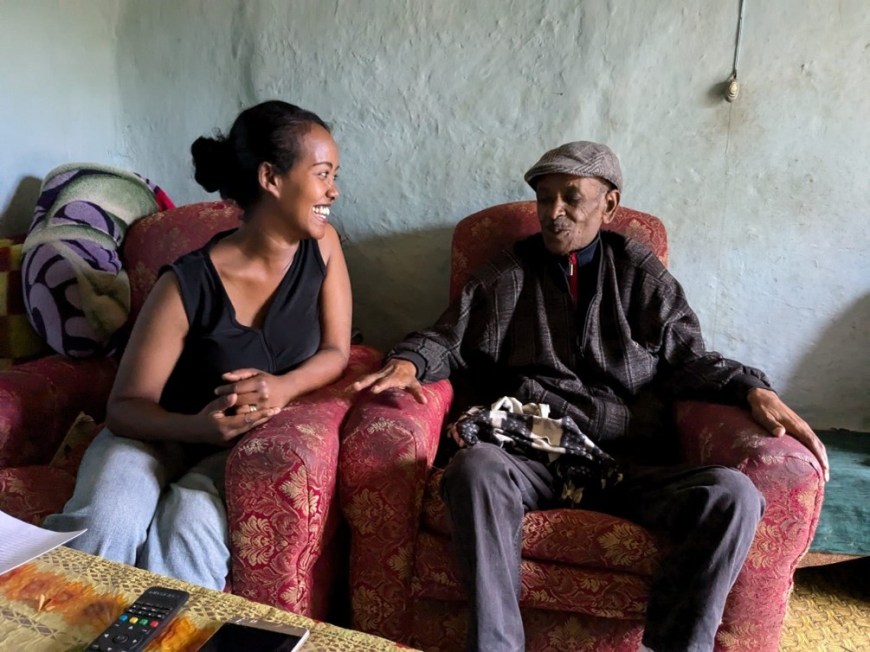
Patient story – Afework

Afework is a 60 year old Christian Orthodox man with throat cancer. It was diagnosed a year ago when he noticed discharge from his nose. Following diagnosis, he received 34 treatments of radiotherapy and 8 cycles of chemotherapy. Initially, post-treatment, he had severe radiotherapy burns to his neck (we were shown a photo) and the skin was very damaged. This has now healed but he continues to have a very dry mouth and therefore difficulty swallowing. He had lost weight over the last year due to this.

Afework lives with his wife and has 4 grown up children. He worked as a driver for 32 years and is hoping to return to work, as there was no sign that the cancer had spread on a recent CT scan.

He was not taking any regular medication although we suggested he try chewing gum to stimulate his own saliva (artificial saliva is not available in Ethiopia). Kalkidan checked his mouth and there was no sign of candida (thrush) infection. She discussed his diet with him, particularly bearing in mind he looked (and has been told) that he is anaemic. He receives food support from Hospice Ethiopia in the form of rice, oats and teff which his wife can make into a “porridge”. A doctor had advised him to get Plumpnet (a high calorie drink) from the local Health Centre. However, when he went to the Health Centre he was told it is only available for mal-nourished children.

The nurses from Hospice Ethiopia will continue to offer him and his wife advice and support.
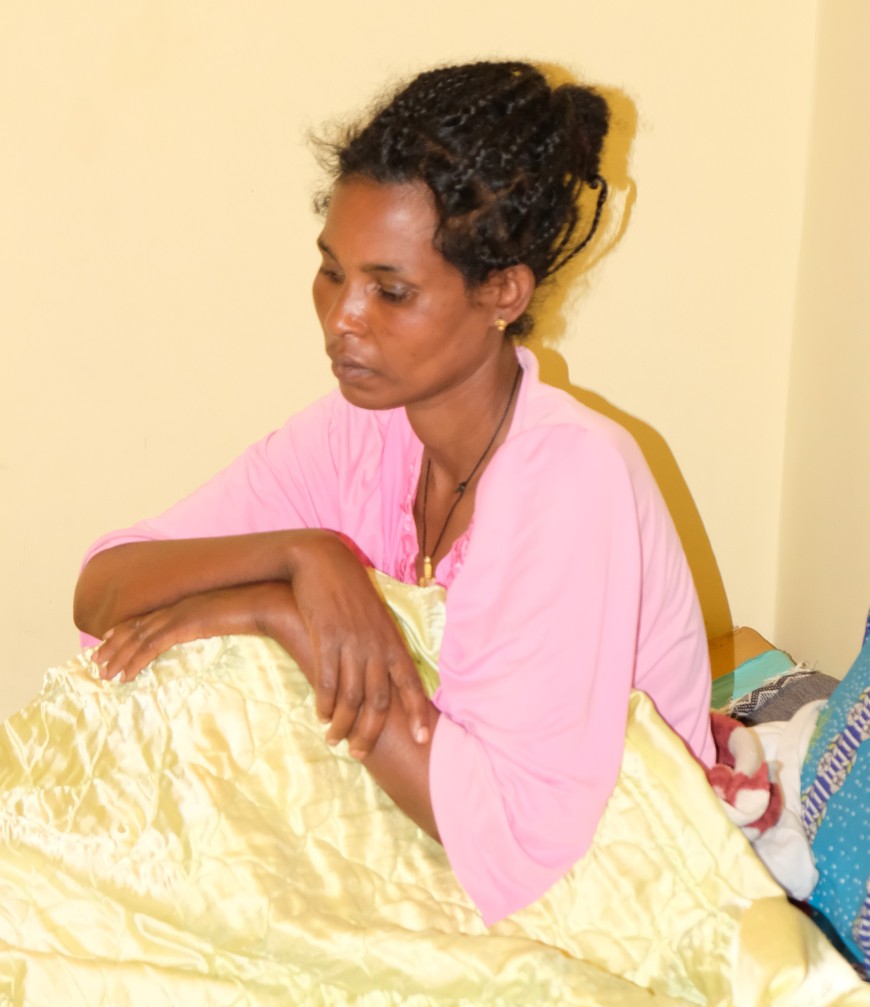
Abena’s Story

Abena (not her real name) is a 38-year-old married lady with breast cancer. On her first visit Nurse Filagot from Hospice Ethiopia carried out a full assessment of her needs. She had been seen by her local health centre several months ago when the diagnosis had been made but had declined further investigations and treatment. She returned to the health centre when the cancer spread to become an open wound, and was referred to the regional hospital and then on to St Paul’s hospital in Addis Adaba for treatment. This meant she had to travel by bus for over 24 hours to the capital, leaving behind her husband and 3 children, aged 15 (with autism), 10 and 6. She was able to stay with her sister but this involved sleeping on the floor of the sitting room.

The assessment was difficult as she only spoke a regional language (there are over 80 in Ethiopia) and was illiterate, but with her sister’s help Nurse Filagot was able to establish her symptoms. She had suffered for at least 50 days with extensive ‘burning’ pain across her body; the cause of which was unknown. She had local spread of her cancer creating an open wound across her breast. She had received one cycle of chemotherapy at St Paul’s Hospital, leaving her feeling exhausted and nauseous. She was also suffering from a low mood which was evident by her lack of eye contact and general demeanour.

Nurse Filagot established a plan for her care. She gave her a course of amitriptyline 12.5mg daily for her pain and metoclopramide for her nausea. She provided dressings and topical metronidazole for the breast wound. She then explained the risks of neutropenic sepsis (which can be caused by chemotherapy) and spent time listening to her concerns and anxieties. She plans to visit again in a week to monitor her symptoms.